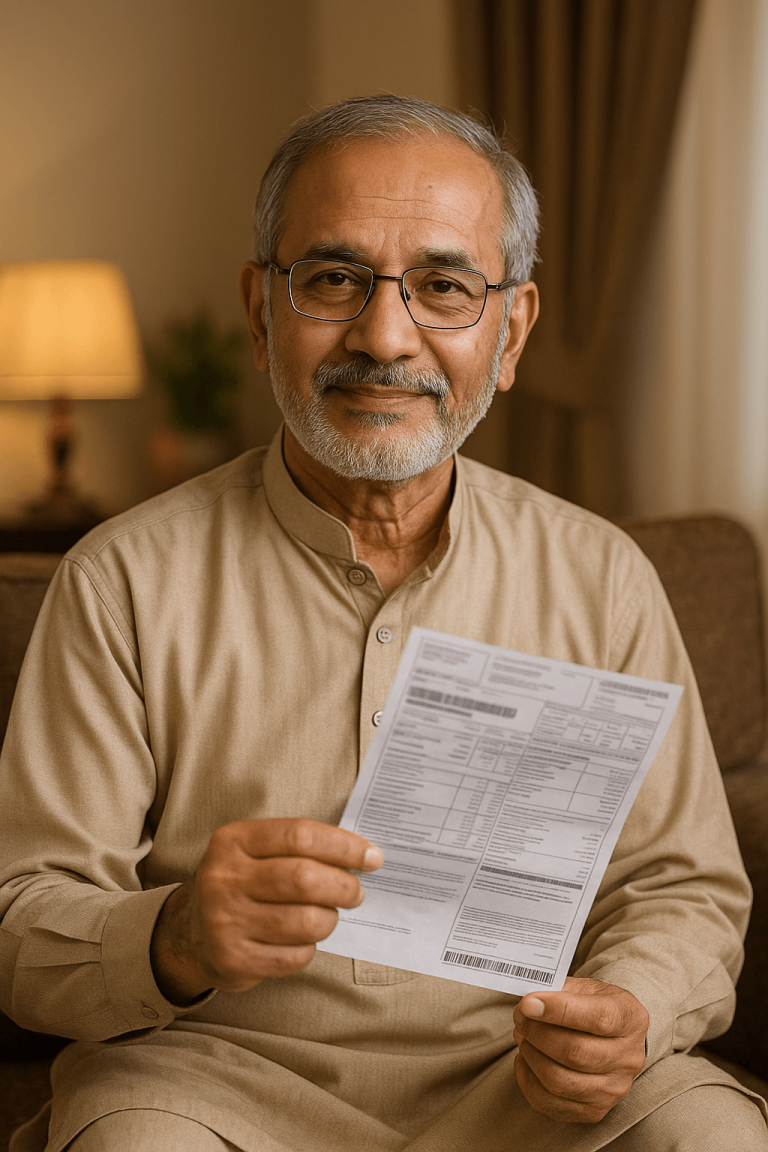
Late Payment Surcharge & Penalties – How Calculated & How to Avoid
Paying your electricity bill on time isn’t just a good habit—it saves you money and avoids unnecessary stress. When you miss the due date, your bill often includes a late payment surcharge or penalty, which is an extra amount added to your original bill. These charges are applied by electricity distribution companies like IESCO under the supervision of NEPRA and WAPDA regulations.
So, what exactly is a late payment surcharge? Simply put, it’s a financial penalty for delayed bill payment. If you fail to pay your bill within the given billing cycle and due date, you’ll be charged an additional amount. This surcharge is calculated as a percentage of the unpaid amount, and it can keep adding up if the delay continues.
Timely bill payment is extremely important for all electricity consumers because delayed payments not only increase your total bill but can also lead to arrears charges, service disconnection, and a negative impact on your consumer record. Understanding how these penalties work and how to avoid them can save you from unnecessary expenses.
In this guide, we’ll explain how late payment surcharges are calculated, why they are applied, and the best ways to avoid them, following IESCO and NEPRA guidelines.
✅ Check and download your IESCO bill online without hassle
What is a Late Payment Surcharge?
A late payment surcharge is an extra amount added to your electricity bill when you miss the due date for payment. This is not just a random fee; it’s a penalty for delayed bill payment to encourage timely payments and maintain the smooth operation of the electricity billing system.
When you don’t pay your bill on time, the unpaid amount becomes overdue, and the company applies a surcharge percentage to calculate the penalty. For example, IESCO and other electricity distribution companies follow a standardized process under NEPRA electricity tariff guidelines. These guidelines clearly allow companies to charge a late payment penalty to cover financial losses caused by delays in payment collection.
So why do these penalties exist? Electricity companies like IESCO need a steady cash flow to maintain infrastructure, pay for power generation, and ensure reliable electricity supply to consumers. When bills are not paid on time, it disrupts the system. That’s why NEPRA and WAPDA regulations allow applying a surcharge as a fair way to manage overdue payments.
In short, a late payment surcharge on electricity bills is both a compliance requirement and a cost recovery mechanism. If you want to avoid this additional cost, paying your bill before the billing cycle deadline is the easiest solution.
✅ Find out your estimated electricity charges with IESCO calculator
How Late Payment Surcharge is Calculated
Understanding how the late payment surcharge is calculated can help you avoid unnecessary costs. The process is straightforward and is based on a fixed percentage of your overdue bill amount, as per NEPRA electricity tariff guidelines.
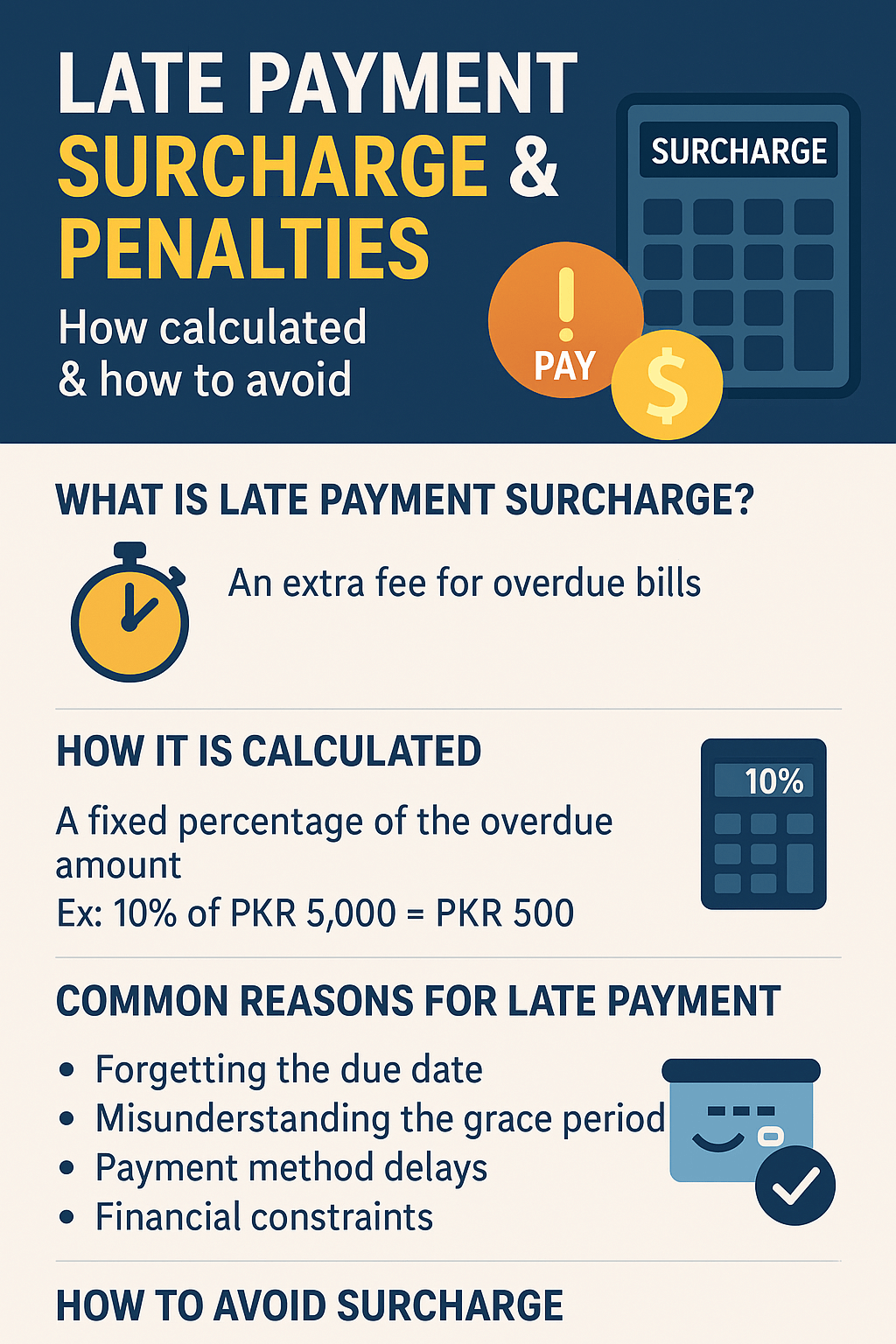
Most electricity distribution companies, including IESCO, apply a 10% surcharge on the current bill amount if you fail to pay before the due date. This means if your bill is PKR 5,000, and you miss the deadline, an extra PKR 500 will be added as a late payment penalty, making your total payable amount PKR 5,500.
Here’s the simple formula for surcharge calculation:
- Late Payment Surcharge = (Bill Amount) × (Surcharge Rate)
Example: 5,000 × 10% = 500 PKR
This surcharge applies after the billing cycle due date, and if you delay further, you may also face arrears charges and even service disconnection. That’s why the billing cycle and due date are so important—missing them means you’re paying more than necessary.
NEPRA regulations allow this surcharge as part of the approved tariff structure to ensure timely revenue collection for electricity companies like IESCO. These funds help maintain operations and avoid supply disruptions.
So, if you want to avoid late payment charges, always pay your bill before the due date. Even setting a reminder can save you from these extra costs!
➡️ Check load requirements to avoid electrical hazards at home
Common Reasons for Late Payment
Even the most responsible electricity consumers sometimes end up paying their bills late. Understanding the common reasons can help you prevent late payment surcharges and penalties.
1. Forgetting the Electricity Bill Payment Deadline
One of the most frequent reasons for late payment is simply forgetting the billing cycle due date. Life gets busy, and without reminders, it’s easy to overlook your electricity bill, resulting in extra surcharge charges.
2. Misunderstanding the Grace Period
Many people assume there’s a long grace period for electricity bill payments, but in reality, the grace period is usually short. Misunderstanding it can lead to delayed payment fees. Knowing the exact due date helps you avoid unnecessary arrears charges.
3. Payment Method Delays
Sometimes the delay isn’t intentional. Bank transfers, online payments, or mobile apps can take time to process. If a payment doesn’t reflect before the due date, the late payment penalty is still applied. It’s important to allow extra time for your chosen payment method.
4. Financial Constraints
At times, financial difficulties prevent timely payment. While unavoidable, it’s best to plan ahead and pay at least part of the bill to minimize surcharge charges and avoid service disconnection.
✅ Download archived IESCO bills online easily
Impact of Delayed Bill Payment
Paying your electricity bill late doesn’t just cost a small surcharge—it can have several serious consequences for electricity consumers. Understanding these impacts can motivate you to stay on top of your bills and avoid unnecessary expenses.
1. Accumulation of Arrears Charges
When a bill is not paid on time, the unpaid amount starts accumulating arrears charges. Over time, these extra charges can grow significantly, making your total payable amount much higher than the original bill.
2. Service Disconnection Due to Non-Payment
Continuous delay in bill payment can lead to service disconnection. Electricity companies like IESCO follow NEPRA guidelines, and disconnecting power is a last resort to encourage timely payments. A disconnected service can be inconvenient and may require additional fees for reconnection.
3. Negative Effect on Consumer Record/History
Late payments can affect your consumer record with the electricity company. A history of delayed payments may impact your ability to request new connections or services in the future. Maintaining a clean payment record ensures smooth interactions with your utility provider.
4. Additional Interest Charges and Fines
Apart from the initial late payment surcharge, further delays can lead to interest charges and additional fines. These charges continue to accumulate if the bill remains unpaid, making it more expensive over time.
Paying your bill on time is the easiest way to avoid arrears, fines, and service disruptions. Simple habits like setting reminders or using online payment options can save you money and stress.
How to Avoid Late Payment Surcharge
Avoiding late payment surcharges is easier than most people think. By following a few simple steps, you can stay on top of your electricity bills and prevent unnecessary penalties.
1. Pay Your Bill Before the Due Date
The most straightforward way to avoid late payment charges is to pay your bill on time. Keeping track of the billing cycle and due date ensures you never incur extra fees. Even paying a day early can save you from surcharge accumulation.
2. Use IESCO/WAPDA Online Payment Options
Using official online payment methods makes it easier to pay your electricity bill promptly. Whether it’s IESCO or WAPDA, online portals, mobile apps, and bank transfers allow for fast and secure transactions, reducing the risk of payment delays.
3. Set Up SMS/Email Payment Reminders
Many electricity consumers forget their bill due dates, leading to late payment fines. Setting up SMS or email reminders can help you stay organized and pay on time, avoiding arrears charges.
4. Understand the Grace Period and Penalties
Knowing the grace period for bill payments and penalty rules can help you plan better. While some delay may be allowed, the late payment surcharge applies after the grace period ends, so awareness is key to staying compliant.
5. Avoid Arrears Build-Up
Consistently delaying payments can lead to arrears accumulation, which increases the total bill amount over time. Paying your bills regularly helps maintain a clean consumer record and avoids extra interest charges and fines.
By following these steps, you can manage your electricity payments efficiently, save money, and stay compliant with NEPRA, WAPDA, and IESCO regulations.
➡️ Which online portals offer instant utility bill downloads in Pakistan?
NEPRA and IESCO Guidelines on Surcharges
Understanding the guidelines from NEPRA and IESCO can help you stay informed about late payment surcharges and avoid unnecessary penalties. These rules are designed to ensure fair billing and timely revenue collection for electricity distribution companies.
1. NEPRA Regulations on Late Payment Penalties
The National Electric Power Regulatory Authority (NEPRA) sets the rules for electricity tariffs and late payment charges across Pakistan. According to NEPRA guidelines, electricity companies are allowed to impose a fixed percentage surcharge on unpaid bills after the due date. These regulations ensure that penalties are standardized, transparent, and fair for all consumers.
2. Role of IESCO and Other Distribution Companies
Companies like IESCO implement these guidelines by calculating late payment surcharges on overdue bills. They monitor billing cycles, track consumer payments, and apply arrears charges when payments are delayed. Other electricity distribution companies across Pakistan follow similar rules under NEPRA supervision, ensuring a consistent system for all consumers.
3. Official Notices and Circulars Regarding Fines
IESCO regularly issues official notices and circulars to inform consumers about billing policies, surcharge rates, and deadlines. These communications help consumers understand when late payment penalties apply and provide instructions on how to avoid them, such as paying online or before the billing due date.
By staying aware of NEPRA and IESCO regulations, you can avoid late payment charges, maintain a clean consumer record, and ensure uninterrupted electricity service.
Frequently Asked Questions
1. What Happens If I Pay My Electricity Bill Late?
If you pay your bill after the due date, a late payment surcharge is applied to your total amount. Continued delays may lead to arrears accumulation, interest charges, and in extreme cases, service disconnection. Paying on time helps you avoid these extra costs.
2. Is There Any Grace Period for IESCO Bill Payment?
Yes, IESCO provides a short grace period after the billing due date. However, the late payment penalty applies immediately after this period ends. Being aware of the grace period ensures you don’t unintentionally incur surcharge charges.
3. How Is the Late Payment Surcharge Calculated?
The late payment surcharge is typically a fixed percentage of your overdue bill. For example, if your bill is PKR 5,000 and the surcharge rate is 10%, an extra PKR 500 will be added. The calculation follows NEPRA-approved rules and is applied by IESCO and other distribution companies.
4. Can Late Payment Affect My Future Connections?
Yes, consistently delaying payments can negatively impact your consumer record. A history of late payments may affect future electricity connections or services. Maintaining a timely payment record helps you stay in good standing with IESCO and other electricity providers.
Conclusion
Timely electricity bill payments are more than just a routine—they help you avoid late payment surcharges, arrears charges, and service disruptions. By staying on top of your bills, you not only save money but also maintain a clean consumer record with IESCO and other electricity providers.
To stay compliant and avoid penalties, always use official payment channels, pay before the due date, and keep track of billing cycles and grace periods. Simple steps like online payments or SMS/email reminders can prevent unnecessary fines and interest charges.
Take control of your electricity payments today—pay on time, avoid surcharges, and enjoy uninterrupted service while following WAPDA and IESCO guidelines.