
Safety During Electrical Storms & Emergencies | Essential Tips & Precautions
Electrical storms can be both awe-inspiring and dangerous. The flashing lightning, booming thunder, and sudden power surges are a reminder of nature’s immense power—and the risks they bring. Whether it’s a sudden thunderstorm or an unexpected power outage, being prepared is key to keeping yourself, your family, and your property safe.
Lightning strikes, electrical hazards, and storm-induced power failures are not just inconvenient—they can be life-threatening. From fires caused by electrical surges to injuries from direct contact with live wires, the dangers are real. That’s why understanding thunderstorm safety tips, practicing electrical hazard prevention, and having a solid plan for emergency preparedness are essential steps every homeowner should take.
In this guide, we’ll walk you through practical, easy-to-follow safety measures to protect yourself during electrical storms and emergencies. By staying informed and prepared, you can reduce risks and ensure your home and loved ones stay safe when nature strikes.
✅ Check bill here and download the duplicate copy
Understanding Electrical Storms
Electrical storms, also known as thunderstorms, occur when the atmosphere becomes unstable, creating powerful bursts of lightning, thunder, and heavy rain. Lightning forms when static electricity builds up in clouds and discharges toward the ground or between clouds, releasing massive energy in an instant. While fascinating to watch from a safe distance, lightning carries serious risks that can cause injury, property damage, and even fatalities.
During storms, various electrical hazards can arise. Power surges caused by lightning strikes can damage home appliances and electrical systems. Downed power lines pose extreme dangers, as touching them can result in severe electric shock or death. Flooding from heavy rain can also interact with electrical outlets and devices, creating hidden hazards inside homes. Understanding these risks is crucial for effective lightning strike prevention and overall severe weather safety.
Organizations like the National Weather Service (NWS) and the Lightning Protection Institute (LPI) emphasize the importance of storm awareness and preparedness. By recognizing the signs of an approaching storm and taking proactive safety measures, you can significantly reduce your risk and ensure your home and family remain protected.
General Safety Guidelines During Electrical Storms
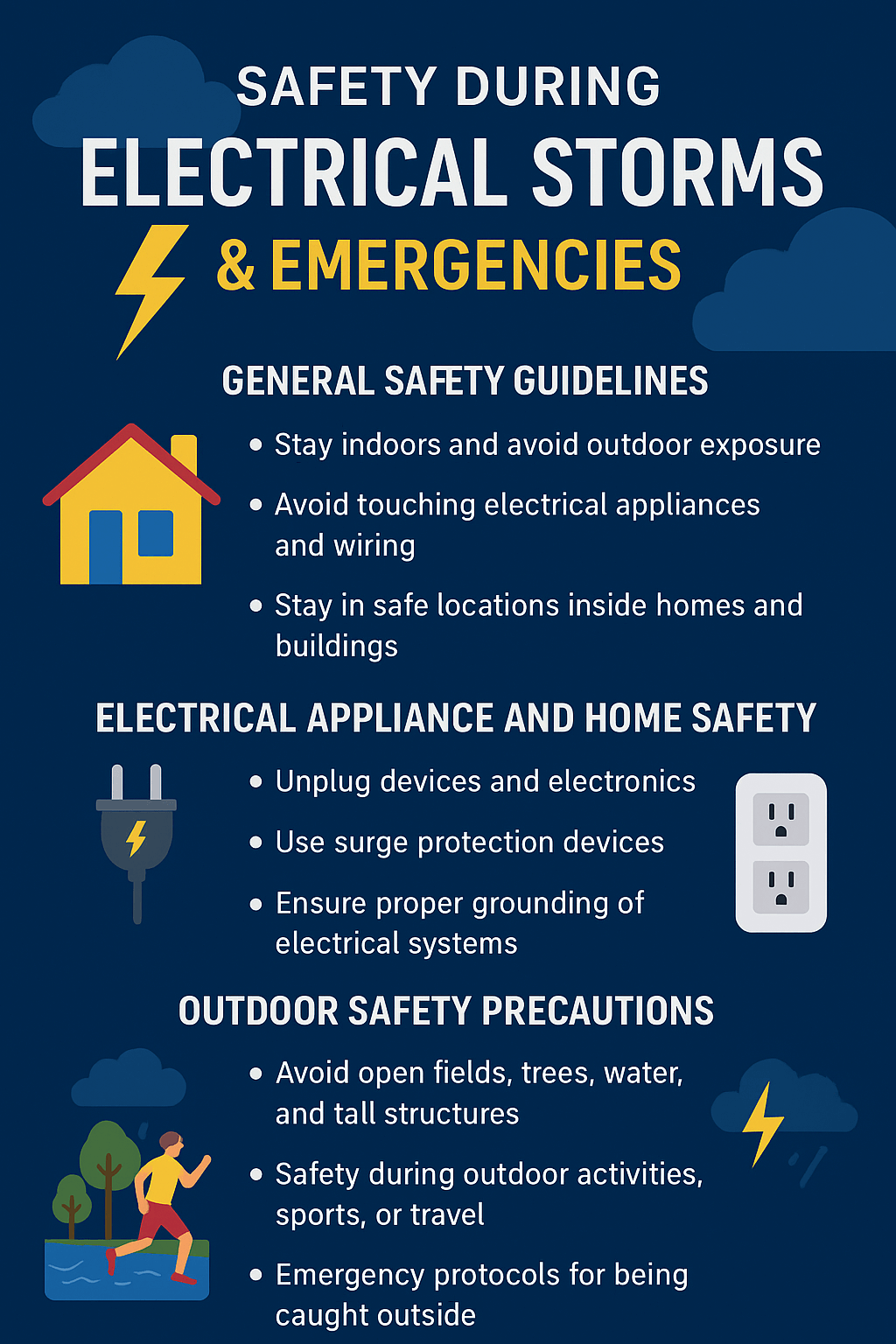
When an electrical storm hits, your priority should always be safety. One of the simplest yet most effective precautions is to stay indoors during a thunderstorm. Avoid outdoor activities until the storm has fully passed, as lightning can strike even when the sky seems clear. If you’re caught outside, seek shelter in a sturdy building or a fully enclosed vehicle—never under trees or near tall structures.
Inside your home, it’s important to practice home electrical safety. Avoid touching electrical appliances, cords, or wiring during the storm, as lightning can travel through electrical systems and cause serious injuries. Keep a safe distance from windows and doors, and avoid using plumbing fixtures like sinks or bathtubs, which can also conduct electricity.
Choosing a safe location during an electrical storm is crucial. Ideally, stay in the interior parts of your home, away from external walls, windows, and electrical devices. Rooms without electronics, such as hallways or closets, are often the safest. By following these safety measures during lightning, you minimize the risk of electrical hazards and protect yourself and your loved ones until the storm passes.
Electrical Appliance and Home Safety
Electrical storms can put your home’s appliances and electrical systems at serious risk. One of the most effective ways to protect your electronics is to unplug devices before the storm hits. Even when turned off, plugged-in devices can be damaged by sudden power surges caused by lightning strikes.
Using surge protection devices is another key step in safeguarding your home. These devices help absorb unexpected spikes in electricity, preventing costly damage to computers, TVs, refrigerators, and other essential appliances. For households that rely heavily on electronics, surge protectors are a simple yet powerful tool to maintain residential electrical safety.
✅ Estimate commercial or domestic IESCO bills quickly
Equally important is ensuring proper grounding of electrical systems. Proper grounding provides a safe path for excess electricity to flow into the earth, reducing the risk of electrical shocks or fires. Regular inspections from electrical utility companies or certified electricians can help verify that your home’s electrical circuits are safe and up to standard.
By combining these practices—unplugging devices, using surge protection, and maintaining proper grounding—you can significantly reduce the risks associated with electrical storms and maintain electrical circuit safety throughout your home.
Outdoor Safety Precautions
Being outdoors during an electrical storm can be extremely dangerous if proper precautions are not taken. To reduce the risk of electrical shock, always avoid open fields, tall trees, bodies of water, and any elevated structures, as lightning naturally seeks the highest points.
If you’re engaged in outdoor activities such as sports, hiking, or traveling, it’s essential to have safety protocols in place for thunderstorms. As soon as you notice darkening skies, distant thunder, or flashes of lightning, seek shelter immediately in a sturdy building or a fully enclosed vehicle. Avoid metal objects such as golf clubs, bicycles, or fences, which can conduct electricity.
Sometimes, storms hit unexpectedly, and you may find yourself caught outside. In such situations, minimize your contact with the ground by squatting low with your feet together—do not lie flat. Spread out from groups of people to reduce the chance of multiple injuries from a single strike. Following these outdoor lightning safety measures can dramatically lower your risk and help you stay protected until it is safe to return indoors.
Emergency Preparedness for Power Outages
Electrical storms can often lead to unexpected storm-induced power failure, leaving homes and communities without electricity for hours—or even longer. Being prepared with a reliable emergency power supply can make a significant difference in maintaining safety and comfort during these situations. Backup options like generators or battery packs ensure that essential appliances, medical equipment, and communication devices remain functional. Always follow portable generator safety guidelines to prevent accidents or carbon monoxide hazards.
In addition to power backups, keeping well-stocked emergency kits and supplies is crucial. Items such as flashlights, batteries, first aid kits, bottled water, non-perishable food, and blankets can help your household stay safe and self-sufficient during prolonged outages.
Having a communication plan during electrical emergencies is equally important. Make sure all family members know how to reach each other if phone lines or mobile networks are disrupted. Schools and public institutions often coordinate with emergency response teams to ensure students and staff stay safe during storms. Likewise, households should establish a clear plan for checking on neighbors, especially the elderly or vulnerable individuals.
By preparing for power outages, maintaining backup power sources, and having a clear emergency plan, you can navigate electrical storms more safely and reduce the stress associated with sudden power interruptions.
✅ Retrieve previous IESCO bills for record keeping
First Aid and Response to Electrical Injuries
Electrical shocks and lightning strikes can be extremely dangerous, and knowing how to respond quickly can save lives. If someone suffers an electrical shock, the first step is to cut off the source of electricity without putting yourself at risk. Never touch the person directly if they are still in contact with a live electrical source.
Once the area is safe, provide electrical shock first aid. Check the person’s breathing and pulse, and if necessary, begin CPR immediately. Treat any visible burns with clean, non-stick dressings, and avoid applying ice or ointments directly to severe burns. Minor burns can be cooled with running water, but professional medical attention is always recommended.
Knowing when to call emergency services is crucial. Call immediately if the person loses consciousness, shows irregular heartbeat, experiences difficulty breathing, or has significant burns. Prompt medical intervention can prevent further complications.
Organizations like the Occupational Safety and Health Administration (OSHA) emphasize proper electrical emergency response training for both workplaces and homes. Being aware of first aid for electrical injuries and prepared to act calmly during an emergency ensures you can protect yourself and others from the serious risks of electrical shocks.
➡️ Use this calculator to manage your power requirements smartly
Lightning Protection and Preventive Measures
Protecting your home and family from electrical storms goes beyond reacting to immediate threats—it’s about proactive preparation. One of the most effective ways to reduce risk is through lightning protection. Installing lightning rods and properly grounded systems directs dangerous electrical energy safely into the earth, preventing damage to your home and electrical appliances.
Equally important is educating your family or staff about storm safety. Simple steps, like knowing storm safety guidelines, identifying safe locations in your home, and understanding electrical safety equipment, can make a huge difference during an emergency. Regular discussions and drills ensure everyone knows how to act quickly and calmly if lightning strikes nearby.
Maintaining your outdoor electrical systems is another key preventive measure. Exposed wires, antennas, or poorly grounded equipment can increase the risk of electrical hazards during storms. Consulting organizations like the Lightning Protection Institute (LPI) can help ensure that your lightning protection systems are installed correctly and functioning as intended.
By combining structural protection, proper maintenance, and ongoing education, you can significantly improve lightning strike safety for your home, workplace, or community, reducing risks and enhancing peace of mind during electrical storms.
FAQs
Q1: What is the safest place to stay during an electrical storm?
The safest place is indoors, preferably in the interior of your home, away from windows, doors, and electrical appliances. Avoid plumbing fixtures and stay clear of metal objects that can conduct electricity. Following home electrical safety measures keeps you protected from lightning and power surges.
Q2: Should I unplug all my electronics during a storm?
Yes. Unplugging devices and electronics prevents damage from sudden power surges. Using surge protection devices alongside unplugging is an added layer of safety to protect sensitive appliances.
Q3: Can I be safe in a car during a thunderstorm?
Yes, a fully enclosed vehicle is one of the safest places outdoors. Keep your hands away from metal surfaces and avoid touching any electrical components in the car. This is a key part of outdoor lightning safety.
Q4: What should I do if someone gets an electrical shock?
Immediately disconnect the source of electricity if it’s safe. Check the person’s breathing and pulse, and begin CPR if necessary. Treat burns carefully and call emergency services right away. Understanding electrical shock first aid can save lives.
Q5: How can I prepare for power outages caused by storms?
Keep an emergency power supply like generators or battery packs ready, along with emergency kits containing flashlights, water, and essential supplies. Have a clear communication plan with family or neighbors to stay connected during storm-induced power failure.
Q6: How can I protect my home from lightning strikes?
Installing lightning rods, grounding systems, and maintaining outdoor electrical systems are essential preventive steps. Educating family members about storm safety guidelines and using proper electrical safety equipment ensures comprehensive protection.
Conclusion
Electrical storms and related emergencies can be unpredictable and dangerous, but being prepared makes all the difference. By following essential safety measures during lightning, such as staying indoors, unplugging electronics, using surge protection devices, and maintaining proper grounding, you significantly reduce the risks to yourself and your home. Practicing electrical storm survival strategies and having clear emergency preparedness plans ensures that you and your loved ones can respond calmly and effectively when a storm strikes.
Stay informed by paying attention to updates from local authorities and organizations like the National Weather Service (NWS). Knowledge about approaching storms, power outages, and safety advisories can help you take timely precautions.
Finally, make it a habit to prepare emergency kits, educate your family and neighbors, and consistently follow safety protocols. These simple but powerful steps can save lives, protect property, and give you peace of mind during electrical storms and other emergencies.