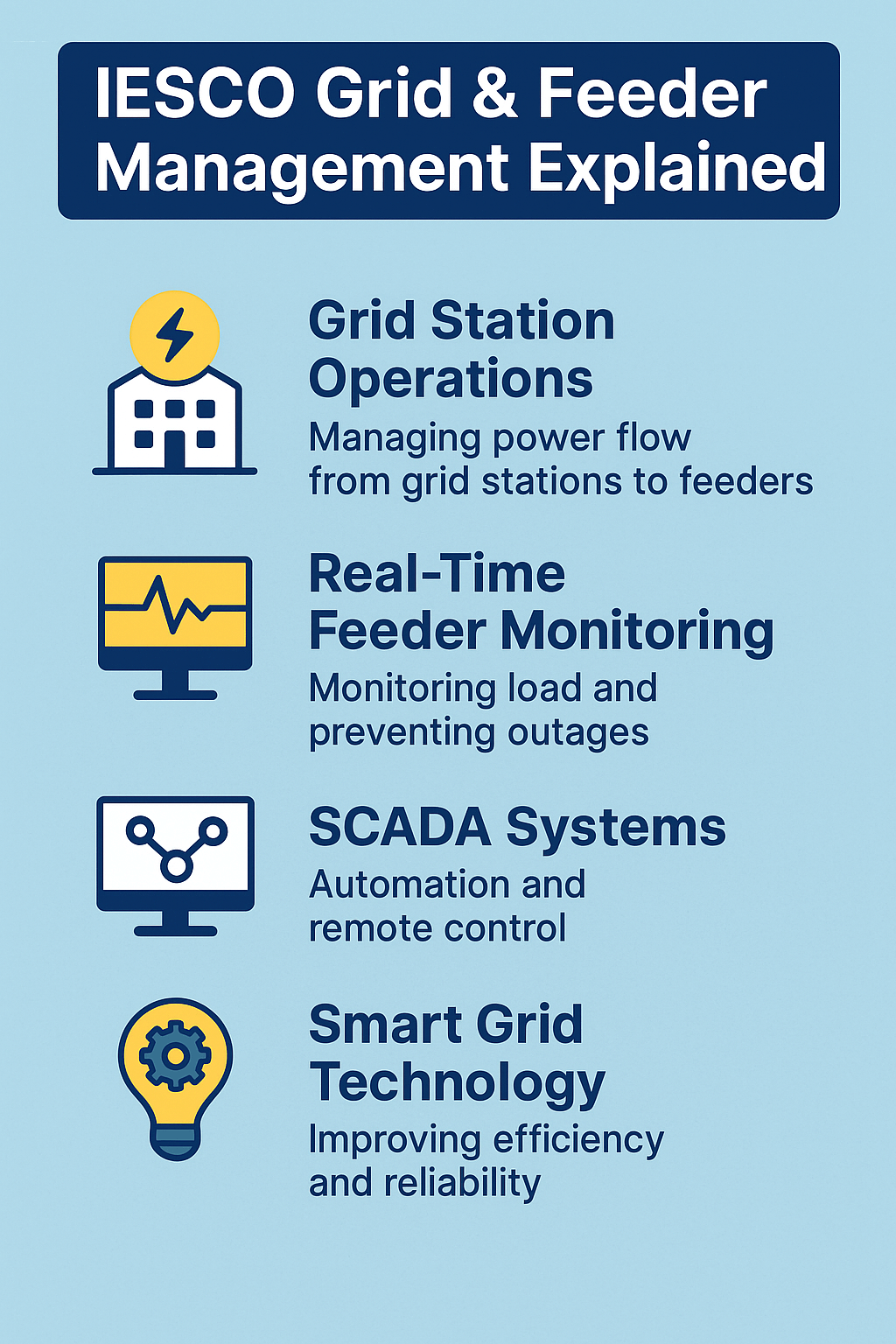
IESCO Grid & Feeder Management Explained | Load Management & Smart Solutions
Islamabad Electric Supply Company (IESCO) is one of the major electricity distribution companies in Pakistan, responsible for delivering power to millions of consumers in Islamabad, Rawalpindi, and surrounding regions. Its primary role is to ensure a stable and uninterrupted electricity supply through an extensive network of grid stations, feeders, and substations.
But how does IESCO manage such a massive distribution system efficiently? The answer lies in its grid and feeder management strategies, which play a vital role in maintaining power stability, reducing outages, and ensuring voltage regulation across its entire network.
Effective grid management means monitoring and controlling the power flow from high-voltage grid stations to different feeders, which then deliver electricity to homes, businesses, and industries. Similarly, feeder management ensures that the load is balanced, losses are minimized, and feeder tripping is reduced—especially during peak demand periods.
Organizations like NEPRA (National Electric Power Regulatory Authority) and NTDC (National Transmission and Dispatch Company) also play an important part in setting regulations and transmitting power to IESCO’s grid network. Together, these entities help create a reliable electricity distribution system that supports both urban and rural areas.
✅ IESCO customer bill check portal for instant results
In this blog, we’ll dive deeper into how IESCO manages its grids and feeders, why this system is crucial for consumers, and what modern technologies like SCADA systems and smart grids bring to the table for a smarter, more efficient power supply.
What is Grid Management in IESCO?
Grid management is the backbone of a reliable electricity distribution system. In simple terms, a grid station acts as a central hub where high-voltage electricity from transmission lines is converted into lower voltage for distribution through feeders to homes and businesses. Without effective grid management, maintaining a steady power supply would be impossible.
A typical grid station consists of several critical components, including:
-
Substations – These regulate and step down voltage for safe distribution.
-
High-voltage transmission lines – Carry power from generation units to grid stations.
-
Transformers – Convert high-voltage electricity to lower levels suitable for distribution.
To ensure grid reliability, IESCO uses modern systems like SCADA (Supervisory Control and Data Acquisition), which allows real-time monitoring and control of grid operations. This technology helps detect faults, manage loads efficiently, and minimize outages before they affect consumers.
Additionally, smart grid solutions in Pakistan are being integrated to make power distribution more efficient and automated. These advanced systems assist in energy demand forecasting, voltage regulation, and improving overall network stability. As a result, IESCO can ensure fewer blackouts, balanced loads, and better service quality for its consumers.
✅ Search your IESCO bill history using your reference number
Understanding Feeder Management
An electricity feeder is a vital link in the power distribution chain. Simply put, a feeder is a distribution line that carries electricity from the grid station to different local areas, ensuring that homes, businesses, and industries receive a stable power supply.
Once the high-voltage electricity is converted to a lower voltage at the grid station, feeders take over and deliver this energy to specific zones. Each feeder is responsible for a particular region or locality, which makes feeder management essential for balancing load and reducing outages.
One of the key goals of feeder management is loss reduction. Losses can occur due to technical issues, overloading, or power theft. To tackle this, IESCO uses advanced monitoring systems that help in detecting inefficiencies and improving distribution efficiency.
There is also a noticeable difference between urban and rural feeder performance. Urban feeders usually handle higher energy demand because of dense populations and commercial usage, requiring advanced load balancing and voltage regulation. On the other hand, rural feeders cover longer distances and face challenges like line losses and lower infrastructure development.
By implementing feeder loss reduction techniques, real-time monitoring, and smart grid solutions, IESCO ensures better voltage stability, efficient energy distribution, and reduced outages for all types of consumers.
✅ Quickly estimate IESCO bills for different unit consumption
Role of IESCO in Power Distribution
IESCO plays a crucial role in ensuring that electricity reaches millions of consumers efficiently and reliably. At the heart of this process are its grid station operations, where power from the national transmission system is received, transformed, and distributed through multiple feeders. These grid stations work round the clock to maintain voltage stability and ensure that energy flows smoothly across the network.
To manage this massive system, IESCO uses real-time feeder monitoring. This helps in load management, preventing overloading and minimizing the chances of unplanned outages. By monitoring the performance of each feeder, IESCO can quickly respond to faults, balance demand, and optimize electricity distribution.
Modern technologies like SCADA (Supervisory Control and Data Acquisition) systems play a big part in this process. SCADA enables remote monitoring and control of grid stations and feeders, allowing IESCO to detect issues instantly and maintain an uninterrupted supply. Alongside SCADA, smart meters provide accurate data on energy consumption, helping improve energy demand forecasting and reducing losses.
The Energy Control Center serves as the command hub, where all grid and feeder operations are coordinated. Additionally, components like the Distribution Transformer ensure voltage is stepped down safely for residential and commercial use. Together, these systems and entities form the backbone of a reliable electricity distribution network that serves both urban and rural consumers efficiently.
➡️ Find out if your electrical wiring can handle your appliances
Role of IESCO in Power Distribution
Grid Station Operations Under IESCO
Grid stations are the starting point of IESCO’s power distribution system. These facilities receive high-voltage electricity from the national transmission network and convert it into lower voltages suitable for distribution. Their primary job is to ensure voltage stability and smooth power flow across all connected feeders.
Real-Time Feeder Monitoring for Load Management
To prevent overloading and outages, IESCO uses real-time monitoring of feeders. This system allows operators to track electricity demand, identify issues instantly, and manage load distribution efficiently. With this approach, power interruptions are reduced, and supply reliability improves.
Advanced Technologies: SCADA and Smart Meters
Modern tools like SCADA (Supervisory Control and Data Acquisition) have revolutionized grid and feeder management. SCADA enables remote monitoring and quick fault detection, ensuring continuous supply. Additionally, smart meters provide accurate energy consumption data, helping with energy demand forecasting and reducing losses.
Why Do Feeders Trip? Common Issues
Causes of Feeder Tripping During High Demand
One of the most common reasons for feeder tripping is a sudden rise in electricity demand, especially during peak hours. When the load on a feeder exceeds its capacity, the system automatically shuts down to prevent major damage or a complete power failure. This is why load balancing and real-time monitoring are critical in IESCO’s distribution system.
Overloading, Maintenance, and Technical Faults
Overloading happens when too many appliances or heavy machinery operate on the same feeder, causing stress on the power lines. Scheduled or unscheduled maintenance work can also lead to temporary feeder shutdowns. Additionally, technical faults, such as damaged conductors, loose connections, or malfunctioning transformers, are other major reasons for feeder trips. Weather conditions like storms and strong winds can worsen these issues by damaging poles and lines.
Impact on Load Shedding Schedules
Feeder tripping directly affects load shedding schedules. When a feeder trips unexpectedly, it disrupts the planned load distribution and may cause longer power outages in certain areas. To minimize this, IESCO uses real-time monitoring, SCADA systems, and preventive maintenance to ensure feeders remain stable and power interruptions are kept to a minimum.
IESCO Load Management Strategies
Load Balancing in Power Grid to Avoid Blackouts
One of IESCO’s top priorities is to maintain load balancing across its power grid. When electricity demand spikes, especially during peak hours, there is a high risk of overloading, which can lead to feeder trips and even blackouts. To avoid this, IESCO distributes the electrical load evenly among different feeders and grid stations. This ensures voltage stability and keeps the supply consistent for both urban and rural consumers.
Outage Detection Technology and Preventive Measures
Modern outage detection systems allow IESCO to quickly identify faults in the network. With real-time monitoring tools and SCADA systems, operators can immediately locate issues and take preventive steps before a complete shutdown occurs. Additionally, scheduled maintenance programs help prevent technical faults and reduce the chances of unexpected feeder tripping.
How Energy Demand Forecasting Helps in Grid Reliability
Accurate energy demand forecasting plays a vital role in IESCO’s load management strategy. By analyzing past usage patterns, weather conditions, and seasonal demand, IESCO can predict when electricity demand will rise. This forecasting enables better planning, efficient grid operations, and minimizes the risk of unplanned outages.
Modern Solutions for Grid & Feeder Management
Use of Smart Grid Technology in IESCO
IESCO is moving towards smart grid technology to make power distribution more efficient, reliable, and automated. A smart grid uses digital systems and sensors to monitor electricity flow in real-time, helping reduce outages, improve load management, and ensure better voltage regulation. This technology allows for two-way communication between the utility and consumers, making the system more interactive and responsive.
Role of SCADA System for Automation
The SCADA (Supervisory Control and Data Acquisition) system is one of the most important tools in modern grid management. SCADA provides IESCO with remote control and automation capabilities, enabling quick fault detection, real-time status updates, and instant corrective actions. This minimizes downtime and enhances the overall reliability of the power supply network.
Future Trends: Real-Time Monitoring and AI-Based Predictive Maintenance
Looking ahead, real-time monitoring and AI-based predictive maintenance will revolutionize how IESCO manages its grids and feeders. With artificial intelligence analyzing historical data, the system can predict potential faults before they occur, reducing unexpected outages. These technologies will ensure greater energy efficiency, improved grid reliability, and a smarter electricity distribution system for the future.
Challenges in Grid and Feeder Management
Power Theft and Line Losses
One of the biggest challenges IESCO faces is power theft, which leads to significant line losses. Illegal connections and meter tampering put extra load on feeders, causing voltage fluctuations and unplanned outages. To tackle this issue, IESCO uses real-time monitoring systems and advanced technologies to detect irregularities and reduce technical and non-technical losses.
Aging Infrastructure
Another major hurdle is aging infrastructure. Many grid stations, transformers, and feeders have been in operation for years and require frequent maintenance. Outdated equipment increases the risk of breakdowns and affects grid reliability. Upgrading to modern grid technologies and replacing old systems is essential for a stable electricity supply.
Weather and Environmental Impacts
Extreme weather conditions such as heavy rains, storms, and high winds can severely impact the power distribution network. Poles can fall, conductors can break, and feeders may trip during bad weather, leading to extended power outages. IESCO addresses this by strengthening its infrastructure, implementing preventive measures, and using AI-based predictive systems to prepare for weather-related challenges.
FAQs
What is a grid station in IESCO?
A grid station is a facility where high-voltage electricity from the transmission system is converted into lower voltage for distribution to homes and businesses. It plays a vital role in ensuring voltage stability and reliable power supply across IESCO’s network.
What is an electricity feeder?
An electricity feeder is a distribution line that carries electricity from a grid station to different localities. Each feeder serves a specific area and is essential for load management and outage control.
Why do feeders trip in IESCO?
Feeders usually trip due to overloading, technical faults, or maintenance work. Sometimes bad weather or illegal connections can also cause feeder trips, leading to temporary power outages.
How does IESCO prevent blackouts?
IESCO uses load balancing strategies, SCADA systems, and real-time monitoring to prevent overloading and manage the grid efficiently. These measures reduce the chances of blackouts and improve grid reliability.
What is SCADA, and why is it important?
SCADA (Supervisory Control and Data Acquisition) is an advanced system that allows IESCO to monitor and control grid operations remotely. It helps detect faults quickly, automate processes, and ensure a continuous electricity supply.
How can consumers benefit from feeder management?
When feeders are managed properly, consumers enjoy fewer outages, better voltage regulation, and a more stable electricity supply. Staying informed about feeder schedules also helps users plan their electricity usage during load shedding or maintenance.
Conclusion
The management of grids and feeders is the backbone of a reliable electricity supply system in Pakistan, and IESCO is at the forefront of ensuring efficiency and stability. Through real-time monitoring, load balancing, and SCADA-based automation, IESCO minimizes outages and improves grid reliability, delivering uninterrupted power to millions of consumers.
The future of power distribution lies in smart grid technology, AI-driven predictive maintenance, and advanced energy demand forecasting. These innovations will make the system more efficient, reduce losses, and improve service quality for every consumer.
Stay informed! Keeping track of IESCO load shedding schedules and maintenance alerts will help you plan better and avoid inconvenience. Together, efficient management and consumer awareness can ensure a smarter, more reliable power supply for Pakistan’s future.