Smart Meters in IESCO – Benefits, Installation Process & Cost Guide
The Islamabad Electric Supply Company (IESCO) is taking a big step toward modernization by introducing smart meters for its consumers. These advanced devices are designed to bring accuracy, convenience, and transparency to electricity billing and energy usage. In today’s world, where energy efficiency and real-time monitoring matter more than ever, smart meters are transforming the way electricity is consumed and managed.
What Are Smart Meters and Why Do They Matter in Pakistan?
A smart meter is not just an ordinary electricity meter; it’s a digital device that uses advanced metering infrastructure (AMI) to measure and record energy usage in real-time. Unlike traditional analog meters, smart meters allow two-way communication between consumers and the utility company. This means no more manual meter reading, reduced chances of billing errors, and better control over your energy consumption.
In a country like Pakistan, where power shortages, electricity theft, and inaccurate billing have been common issues, smart meters offer a reliable solution. They help IESCO and its consumers move toward smart energy management, improving both efficiency and reliability.
✅ This guide explains IESCO bill checking step by step
IESCO Smart Meter Installation and Its Benefits
IESCO is rolling out smart meter installation as part of its mission to create a smart grid system across the Islamabad region. These meters are packed with features that make life easier for consumers:
-
Accurate Billing: No more surprises in your electricity bill, thanks to real-time data monitoring.
-
Remote Meter Reading: No need to wait for meter readers; everything is automated.
-
Electricity Theft Prevention: Smart meters help identify and prevent illegal connections.
-
Load Management: Manage your electricity usage and avoid peak demand charges.
With smart meters, consumers can monitor their usage online, optimize their energy consumption, and even contribute to reducing overall power wastage in Pakistan.
Difference Between Digital Meters vs Analog Meters
Traditional analog meters have been in use for decades. They track the cumulative electricity usage, which is then manually read by a meter reader each month. This process often leads to billing errors, delays, and inconvenience for consumers.
On the other hand, digital smart meters are fully automated. They record data in real-time and send it to the electricity provider via two-way communication technology. This means no manual readings, no estimated bills, and complete transparency for the consumer. With smart meters, you can monitor your energy usage online and take control of your electricity consumption like never before.
Role of Advanced Metering Infrastructure (AMI) in Pakistan
Smart meters work hand-in-hand with Advanced Metering Infrastructure (AMI), a modern system that enables communication between the utility company and the consumer. AMI allows remote meter reading, automatic billing, and real-time usage updates.
In Pakistan, this technology is part of the government’s vision to create a smart grid system for better efficiency and reduced losses. By implementing AMI, IESCO aims to cut down on electricity theft, improve billing accuracy, and provide consumers with a better overall experience.
➡️ Calculate expected electricity bill for your home easily
Why is IESCO Installing Smart Meters?
IESCO is moving toward a smart grid system to modernize the way electricity is managed and delivered across Islamabad and the surrounding regions. The introduction of smart meters is a major step in this project, designed to bring transparency, accuracy, and efficiency to the electricity distribution network.
The IESCO Smart Grid Project
The smart grid initiative focuses on upgrading traditional infrastructure with digital technology to ensure better control, reduced losses, and a reliable electricity supply. Smart meters play a key role in this plan because they provide real-time data and two-way communication between consumers and IESCO. This means the company can monitor demand, detect issues instantly, and improve overall service quality.
Benefits for Electricity Consumers in Islamabad
For consumers, this upgrade brings multiple advantages:
-
Accurate Billing: No more wrong readings or estimated bills.
-
Remote Meter Reading: You don’t have to wait for meter readers anymore.
-
Real-Time Usage Insights: Track your electricity usage and manage your consumption.
-
Reduced Electricity Theft: Helps create a fair and transparent system for all consumers.
With these benefits, consumers can enjoy better control over their energy costs and contribute to an efficient power system.
Aligned with Pakistan’s Energy Efficiency Plans
The Government of Pakistan has been promoting energy efficiency and modernization in the power sector. Smart meters are an essential part of this vision, as they encourage demand-side management, reduce wastage, and support the transition toward renewable energy integration in the future.
Integration with NEPRA Regulations
The installation of smart meters also follows NEPRA’s guidelines for improving power sector performance. These meters help ensure compliance with regulatory standards, improve billing accuracy, and create a transparent billing system for both the company and the consumer.
➡️ Use the Old Bill History tool to track billing trends
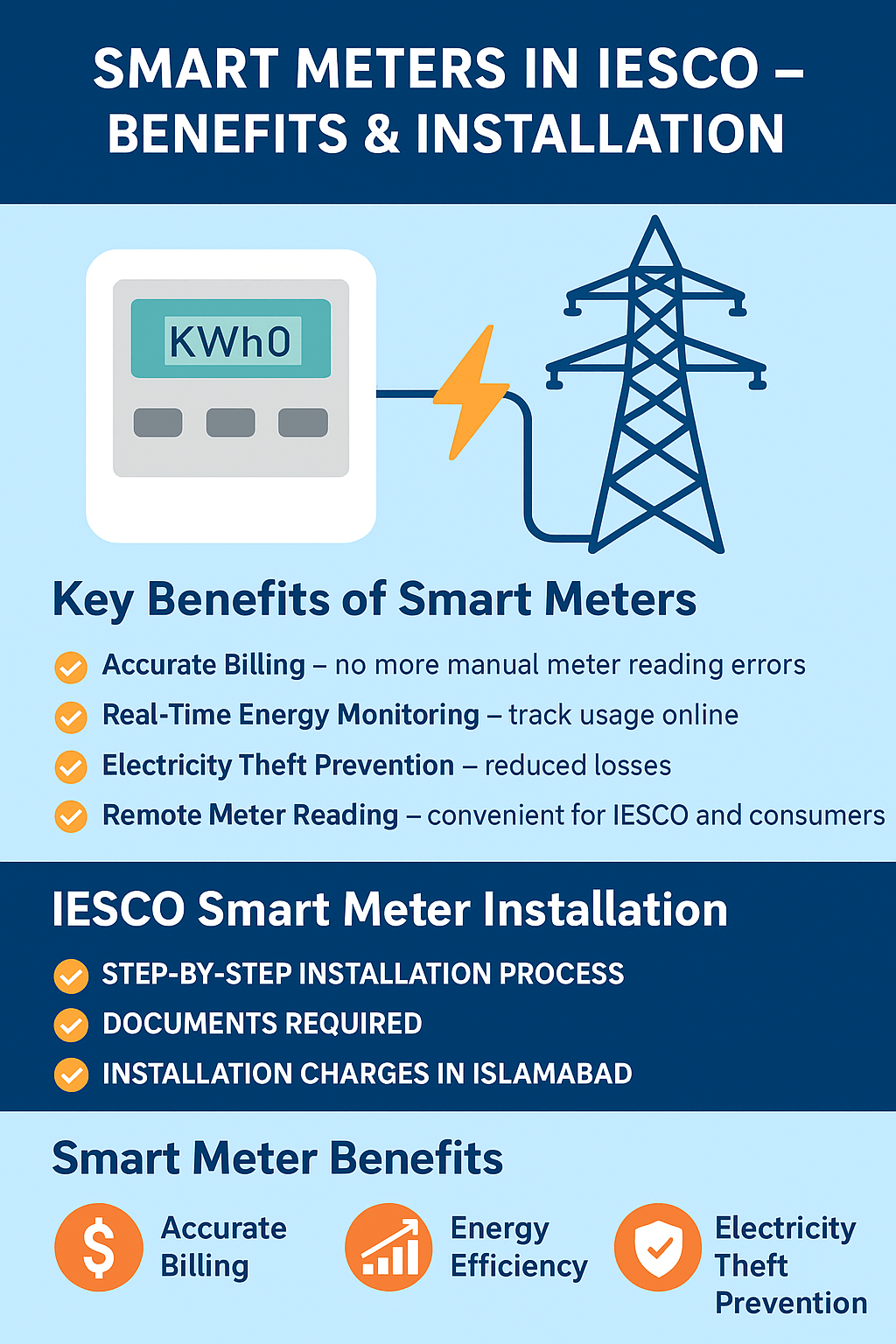
Key Benefits of Smart Meters in IESCO
Smart meters are more than just digital devices – they are a game-changer for smart energy management in Pakistan. IESCO’s initiative to install smart meters offers multiple advantages for both the company and its consumers. Here’s why these devices are making such a big impact:
Accurate Billing – No More Manual Errors
With smart meters, manual meter reading errors are a thing of the past. These advanced devices automatically record your electricity usage and transmit the data directly to IESCO’s system. This means no more estimated bills, disputes, or unnecessary complaints – just accurate billing every time.
Real-Time Energy Monitoring
One of the biggest benefits of smart meters is real-time electricity usage monitoring. Consumers can now track their power consumption on a daily basis, identify high-usage hours, and make smarter decisions to save energy and reduce costs. This level of control was never possible with old analog meters.
Electricity Theft Prevention
Electricity theft has been a major challenge in Pakistan’s power sector. Smart meters help combat this problem by detecting unauthorized connections and unusual consumption patterns instantly. This not only prevents revenue loss for IESCO but also ensures fair billing for honest consumers.
Remote Meter Reading for Ultimate Convenience
Gone are the days when meter readers visited your home every month. Smart meters allow remote meter reading, which saves time for consumers and reduces operational costs for IESCO. Everything is automated, ensuring smooth and efficient billing without delays.
Load Management & Peak Demand Reduction
Smart meters play a key role in demand-side management by helping both the utility and the consumer manage electricity usage during peak hours. This improves grid stability and prevents power shortages, creating a more reliable electricity supply for everyone.
Dynamic Pricing – A Future Possibility
In the future, smart meters can enable dynamic pricing, where electricity rates vary based on demand and supply conditions. This encourages consumers to shift heavy usage to off-peak hours, reducing pressure on the grid and helping save money.
✅ IESCO Estimate load before installing additional equipment
How to Apply for a Smart Meter in IESCO
If you are ready to switch to a smart electricity meter and enjoy all its benefits, IESCO has made the process simple and consumer-friendly. Here are the steps to convert to a smart electricity meter in Islamabad and nearby regions.
Step-by-Step Smart Meter Installation Process
-
Visit the Nearest IESCO Office
Go to your local IESCO office or customer service center to apply for a smart meter. -
Submit an Application
Fill out the official application form for smart meter installation. -
Attach Required Documents
Make sure to include all necessary documents with your application (see the list below). -
Inspection and Approval
IESCO will schedule an inspection to verify your connection and approve the installation. -
Meter Installation
Once approved, an authorized IESCO technician will install your new digital smart meter at your premises.
Documents Required for Installation
When applying for a smart meter, keep these documents ready:
-
Copy of CNIC (Computerized National Identity Card)
-
Latest electricity bill
-
Proof of property ownership or tenancy agreement
-
Completed application form
Having all documents in place ensures a smooth and quick installation process.
Installation Charges in Islamabad Region
The cost of smart meter installation depends on your connection type:
-
Single-phase smart meter: Charges are generally lower and suitable for households.
-
Three-phase smart meter: Higher charges apply for larger homes or commercial setups.
IESCO provides a clear breakdown of charges at the time of application, so you know exactly what to expect.
Switching to a smart meter is an investment in energy efficiency and billing accuracy. It not only gives you better control over your electricity usage but also helps create a smarter power system for Islamabad.
Smart Meter Installation Process
The smart meter installation process is designed to be quick, safe, and efficient, ensuring minimal disruption to your electricity supply. Here’s what you need to know before getting your new meter installed.
How the Smart Meter Installation Works
Once your application is approved, IESCO schedules an installation date. On the assigned day, an IESCO authorized technician visits your premises with the necessary equipment. The technician removes the old analog meter and replaces it with a digital smart meter.
These new meters are based on Internet of Things (IoT) technology, allowing them to communicate directly with IESCO’s central system. This enables real-time data transmission, remote meter reading, and smart energy management for both the consumer and the utility.
Timeline for Installation
In most cases, the installation process takes only 30 to 60 minutes, depending on your connection type (single-phase or three-phase). There is a brief power interruption during the replacement, but it is usually restored quickly after the new meter is configured and tested.
Who Installs the Meter?
Only IESCO-authorized technicians are allowed to install smart meters to ensure safety and compliance with official standards. These technicians are trained to set up the device properly and verify that it is connected to the Advanced Metering Infrastructure (AMI) for accurate readings and monitoring.
Smart meters are a key step toward a smart grid system in Pakistan. With IoT-based smart metering, consumers gain control over energy usage, enjoy accurate billing, and experience a more reliable electricity supply.
Cost of Smart Meter Installation
When you’re planning to switch to a smart meter, understanding the installation cost upfront can help you budget wisely. Here’s a clear, user-friendly breakdown of IESCO’s current charges in Islamabad—whether you’re converting your meter or applying for a new connection.
Current Rates for IESCO Smart Meter Installation
IESCO has introduced updated capital cost rates for new Advanced Metering Infrastructure (AMI) meters as of February 2025. These rates apply to new connections—meter replacements or reconnections may differ.
Single-phase AMI meters:
-
Up to 20 m cable: Rs 35,000
-
Up to 30 m cable: Rs 36,500
-
Up to 40 m cable: Rs 38,000
Three-phase AMI meters (19/0.52 4-Core):
-
Up to 20 m cable: Rs 65,000
-
Up to 30 m cable: Rs 72,000
-
Up to 40 m cable: Rs 79,000
There’s also a model with a thicker cable (19/0.83), typically used for higher loads:
-
Up to 20 m: Rs 85,000
-
Up to 30 m: Rs 95,000
-
Up to 40 m: Rs 110,000
Additionally, for Meter Change Orders (MCOs) or Reconnection Orders (RCOs):
-
Single-phase replacement: Rs 32,000
-
Three-phase replacement: Rs 52,000
Single-Phase vs. Three-Phase Charges
| Connection Type | Base Cost (up to 20 m cable) | Higher Load Option (40 m / thick cable) |
|---|---|---|
| Single-Phase | Rs 35,000 | Rs 38,000 (standard) |
| Three-Phase (Standard) | Rs 65,000 | Rs 79,000 |
| Three-Phase (Heavy Duty) | Rs 85,000 | Rs 110,000 |
So as expected, three-phase meters—especially those designed for heavier loads—carry a significantly higher price tag than single-phase meters due to their increased capacity and complexity.
Future Government Subsidy Possibilities
While IESCO hasn’t announced any current subsidies for smart meter installation, many view it as a future government-led initiative under Pakistan’s broader energy efficiency and smart grid efforts. Subsidies or rebates could lower the cost barrier and accelerate adoption across Islamabad. For now, this remains a possibility to watch closely.
Smart Meters and Energy Efficiency
Smart meters are not just about accurate billing—they are a key tool for energy efficiency and building a smarter, more sustainable power system in Pakistan. By enabling real-time insights and smart energy management, these devices help reduce electricity wastage and open the door for renewable energy integration in the future.
How Smart Meters Help Reduce Electricity Wastage
With traditional meters, consumers have no idea how much electricity they are using until the bill arrives at the end of the month. This lack of visibility often leads to overconsumption and energy wastage.
Smart meters solve this problem by providing real-time electricity usage monitoring. Consumers can see exactly when and where they are using the most power and make quick changes to reduce unnecessary consumption. This not only lowers electricity bills but also reduces strain on the national grid during peak demand.
Contribution to Renewable Energy Integration
As Pakistan moves toward renewable energy sources like solar and wind, smart meters play an important role in managing this transition. They support two-way communication, which means they can measure both electricity consumed and electricity sent back to the grid from sources like rooftop solar panels. This helps integrate renewable energy smoothly into the smart grid system, making Pakistan’s power network more flexible and sustainable.
Benefits for Pakistan’s Smart Grid System
Smart meters are the foundation of a modern smart grid. They allow IESCO to:
-
Detect and respond to outages faster
-
Manage electricity loads during high-demand periods
-
Reduce line losses and theft
-
Ensure a fair and transparent billing system
By connecting thousands of smart meters through Advanced Metering Infrastructure (AMI), Pakistan can build an energy system that is efficient, secure, and ready for future growth.
FAQs
What is a smart meter, and how is it different from a normal meter?
A smart meter is a digital device that records your electricity usage in real time and sends the data directly to IESCO. Unlike traditional analog meters that require manual readings, smart meters use two-way communication to provide accurate billing and real-time electricity usage monitoring. This means no estimated bills and full control over your energy consumption.
How much does it cost to install a smart meter in Islamabad?
The cost depends on your connection type and cable length:
-
Single-phase smart meter: Around Rs 35,000 to Rs 38,000
-
Three-phase smart meter: Rs 65,000 to Rs 79,000 (or higher for heavy load)
Charges may vary slightly, and future government subsidy programs could make smart meters more affordable.
Can I monitor my electricity usage online?
Yes! One of the biggest benefits of smart energy management is the ability to monitor your consumption online. With smart meters, you can track your daily and hourly usage patterns, helping you make smarter decisions and save money.
Do smart meters reduce electricity bills?
Smart meters themselves don’t reduce the unit price of electricity, but they help you manage your energy consumption efficiently. By seeing real-time data, you can cut down unnecessary usage, avoid peak hour charges (when dynamic pricing becomes available), and ultimately lower your monthly bills.
Are smart meters safe and secure?
Yes. IESCO uses IoT-based smart metering with advanced security protocols to ensure that your data and connection remain protected. These meters are tested for safety and comply with NEPRA regulations, so you can trust that they are both reliable and secure.
Conclusion
Smart meters are the future of energy management in Pakistan, and IESCO is leading the way by introducing this modern technology for its consumers. From accurate billing and real-time electricity usage monitoring to remote meter reading and electricity theft prevention, the benefits are clear. These devices not only give consumers greater control over their energy costs but also help build a stronger and more efficient smart grid system.
If you haven’t applied yet, now is the time to take the first step toward smart energy management. Switching to a smart meter means convenience, transparency, and long-term savings.
The future of Pakistan’s power sector depends on smart solutions—and smart meters are the foundation of that future. Be part of the change and experience a modern, reliable, and efficient electricity system with IESCO smart meters.