Feeder-wise Outage Updates for Each IESCO Region – Latest Power Cut Schedule
When it comes to keeping the lights on in Islamabad and surrounding areas, the Islamabad Electric Supply Company (IESCO) plays a vital role. Covering regions like Rawalpindi, Attock, Jhelum, and Chakwal, IESCO operates an extensive electricity distribution network that powers homes, businesses, and essential services every day.
But just like any other utility provider, IESCO sometimes needs to temporarily halt power supply—either for planned maintenance outages to improve infrastructure or due to unscheduled power interruptions caused by technical faults, extreme weather, or emergency repairs. These outages can affect daily routines, production schedules, and even small business operations.
That’s why feeder-wise outage updates are so important. Knowing exactly when and where a power shutdown will occur allows you to plan ahead, avoid disruptions, and make informed decisions about energy use. With power supply restoration updates and a reliable regional outage alert system, residents and businesses can stay one step ahead and manage their schedules without last-minute surprises.
In this guide, we’ll break down how IESCO provides these updates, where you can find them, and how to check the latest status for your area’s feeder—so you’ll always know what’s happening with your electricity supply.
➡️ Check IESCO units & monthly usage on the online portal
Understanding IESCO’s Feeder System
When you flick a switch and the lights come on, you probably don’t think about all the intricate systems working behind the scenes—especially the unsung hero of power distribution: the feeder. In the context of IESCO and its electricity distribution system, a feeder is the main artery that feeds power from a substation to neighborhoods, homes, and businesses. Each feeder is like a dedicated delivery route, ensuring electricity reaches specific areas reliably.
Think of it this way: IESCO’s network is a bit like a city’s transportation grid. Substations are the central terminals, and feeders are the main highways branching out from them. Each branch serves distinct neighborhoods—like Islamabad’s bustling sectors, Rawalpindi’s residential zones, or Attock’s rural pockets. If one “road” (feeder) is down—either for maintenance or due to an emergency—you’ll notice it directly impacts that particular area.
This setup allows for service area power updates that are precise and localized. If you know your feeder, you can get tailored information about outages—scheduled or not—and updates on when power will return. In essence, you’re not left guessing if your neighborhood will go dark; you’re informed, prepared, and in control.
➡️ Use the IESCO Bill Calculator to plan energy usage efficiently
Reasons for Feeder-Wise Outages
Power outages can be frustrating—especially when they come unexpectedly. Understanding the why behind them can ease the stress. Here’s what typically leads to a feeder-wise shutdown from IESCO:
1. Planned Maintenance Work
To keep our electricity flowing smoothly, IESCO regularly carries out infrastructure upgrades and preventive checks on its grid. These planned interruptions are part of a broader maintenance outage schedule, designed to improve safety, boost efficiency, and prevent bigger breakdowns in the future. When these upgrades are scheduled, knowing the timing helps you plan around it—maybe charge your devices in advance or shift sensitive tasks to earlier in the day.
2. Emergency Repairs
Not all outages are planned. Sometimes, unexpected technical failures, traffic accidents damaging poles, or disruptive storms can trigger immediate power cuts on a specific feeder. In such cases, IESCO issues energy supply interruption notices to warn affected areas and initiate repairs as swiftly as possible. No one wants an emergency power shutdown, but timely communication ensures you’re not left in the dark—literally.
3. Load Shedding for Peak Demand Management
During periods of heavy demand—like hot summer afternoons or major events—the power grid can become overloaded. To maintain stability across the electricity distribution system, IESCO may implement load shedding: a method where certain feeders are temporarily shut off to balance supply and demand. Though inconvenient, this strategy helps prevent complete grid failure and ensures power restored more rapidly and fairly across all areas.
By knowing whether an outage is part of a maintenance outage schedule, an emergency power shutdown, or a load shedding measure, you’re empowered with the right information. No surprise blackouts, no guesswork—just practical knowledge to make energy disruptions more manageable.
How IESCO Updates Outage Schedules
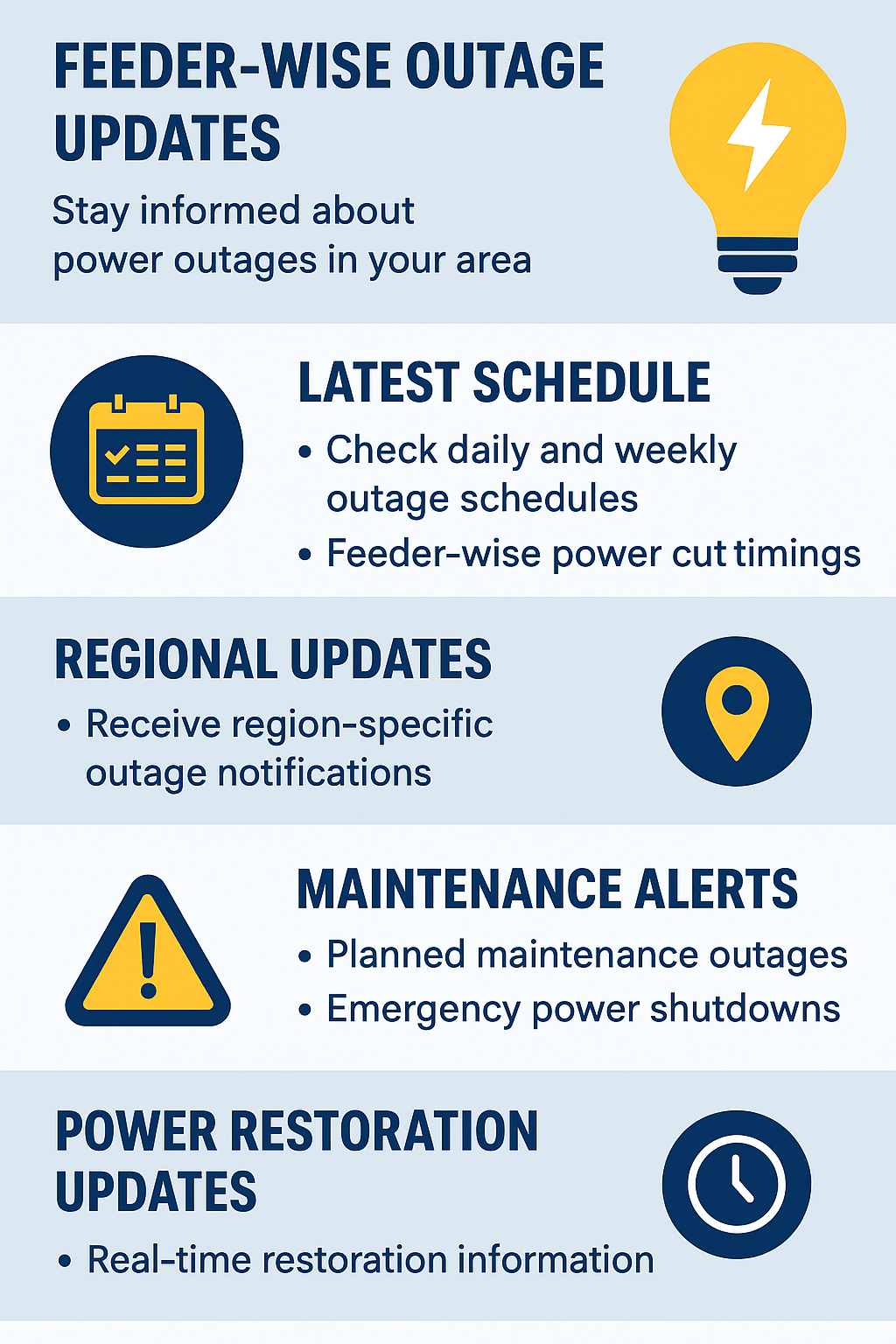
Staying in the loop about power outages has never been easier. Thanks to IESCO’s structured outage notification system, you can always check the outage schedule and monitor the power restoration timeframe for your area—so you’re not left guessing or scrambling when the lights go out.
Where to Check Outage Updates
-
IESCO’s Official Website
The most reliable source is IESCO’s own site, where they often post area-wise shutdown schedules, complete with feeder information, timings, and reasons for the outage—think maintenance, repairs, or load management. These updates help you anticipate changes and plan ahead without surprises. -
IESCO Load Shedding & Shutdown Pages
A dedicated section, such as “Load Shedding Management” or “Annual Maintenance Schedule,” provides users with detailed lists of affected regions, timeframes, and related updates for Islamabad and surrounding areas.
Channels You Can Tap Into
-
Social Media & Apps: Following IESCO on platforms like X (formerly Twitter) or Facebook ensures you catch real-time announcements. Plus, apps like IESCO LIGHT and IESCO Smart send push notifications directly to your phone—whether it’s an upcoming maintenance outage schedule or updates on load management.
-
SMS Alerts & Helpline: Although social media and apps are fast, SMS alerts and the official helpline (e.g., dialing 118) are still reliable—and particularly helpful if you don’t use apps. These alerts often include details on the power restoration timeframe, giving you clarity on when your service is expected back.
-
Local Customer Centers: If you prefer in-person support, you can visit IESCO customer service centers, lodge a complaint, or get face-to-face updates for your exact feeder. The MIS-based system helps them quickly retrieve your outage schedule and assist you with service area power updates.
➡️ Use the old bill history link to access archived bills
Why It Matters
By staying tuned through these channels and knowing when your area’s feeder is scheduled for an outage—or when power restoration is expected—you gain peace of mind. It helps you plan daily chores, prevent interruptions in your work or business, and avoid last-minute inconveniences.
Would you like help drafting a quick “how-to” guide for readers on checking IESCO notifications? I can map that out in Section 5 next!
Region-Wise IESCO Feeder Outage Updates
Here’s a friendly, SEO-optimized, and reader-focused breakdown of how feeder-wise outages affect different regions—based on the latest real-world schedules published by IESCO.
Islamabad
IESCO frequently announces feeder-specific maintenance outages for parts of Islamabad. For example, on August 5, 2025, feeders like I-10/1, I-10/1 New, and I-10/2 New were scheduled for a temporary power suspension from 07:00 AM to 12:00 PM. Earlier, a similar notice included areas such as Anguri, Kirpa, Frash Town, Tufail Shaheed, and Jhang Syedan, with outages programmed from 07:00 AM to 12:00 PM.
Key for readers: Keep an eye out for these area-wise power outage timings. If you live in Islamabad, knowing the specific feeders affected makes planning around outages so much smoother.
Rawalpindi
Be it the City Circle or Cantt Circle, Rawalpindi regularly sees updates on power cuts. On August 5, 2025, feeders like Kamalabad, Ratta, Mumtaz City (City Circle), as well as Rehmatabad 1 & 2, Jail Park, Kot Jabi, Makkah Chowk, and others in the Cantt Circle were scheduled for a 07:00 AM – 12:00 PM interruption.
Recent maintenance plans also include multiple areas in both circles—highlighting how feeder outage information in Pakistan can vary even within the same city.
Attock
On that same August 5 schedule, Attock Circle’s Ghor Ghishti feeders were marked for a shutdown from 08:00 AM to 02:00 PM.
These planned outages are key for residents to know—especially if they’re preparing for long-duration interruptions or coordinating critical errands.
Jhelum
Feeders like Ward No. 8, Hayat Sar Road, and Jhakkar in Jhelum Circle were scheduled for power suspension from 07:00 AM to 11:00 PM on August 5, 2025. Earlier schedules also included areas like Islam Pura, Kangar, Qazian, Scheme-I, and others affected during similar maintenance windows.
This shows that service interruptions in Jhelum can span a wide range of neighborhoods and sometimes last all day.
Chakwal
Chakwal’s feeders—such as Dhariala Jalip and CWO feeders—were on a shutdown list from 07:00 AM to 11:00 PM on August 5, 2025. Earlier plans also included Rawal, Sagarpur, Dhoda feeders, among others P
Such regional outage data confirms that Chakwal’s feeder-wise maintenance can sometimes stretch across the entire day.
➡️ Use Solar Savings Calculator to project your solar benefits
Why This Matters for You
-
Localized Awareness: Knowing feeder-wise schedules ensures you’re not caught off guard by sudden outages.
-
Better Planning: Whether you’re working from home, running a business, or handling daily chores, area-wise power outage timings help adjust your routine.
-
Peace of Mind: Tracking feeder outage information in Pakistan—especially from IESCO’s real schedules—keeps you informed and prepared.
How to Check Your Feeder Outage Status
Ever had your power go out and wondered, “Is it just me, or is the whole area in the dark?”
The answer lies in knowing your feeder outage status—and the good news is, it’s easier to check than you might think.
Step-by-Step: Find Your Feeder & Check Outage Details
-
Locate Your Feeder Name
-
Check your latest IESCO bill; the feeder name is usually printed near the top section under your connection details.
-
If you’ve misplaced your bill, you can also call the IESCO helpline (dial 118) or visit your nearest customer service center to confirm.
-
-
Visit the Official IESCO Outage Schedule Page
-
Head over to the IESCO website or iesco-online-bill.pk to view the area-wise power outage timings.
-
Search for your feeder name in the published maintenance outage schedule or load management plan.
-
-
Check for Real-Time Updates
-
Follow IESCO’s social media accounts or use their mobile apps for instant feeder outage information and regional outage data.
-
Some outages—especially emergency ones—might not appear in the pre-scheduled list but will be announced online or via SMS alerts.
-
Tips for Tracking Updates Daily & Weekly
-
Bookmark the Schedule Page
Save the direct link to IESCO’s outage notification system so you can check it with just one click. -
Sign Up for Alerts
Opt-in for SMS or app notifications to get energy supply interruption notices before they happen. -
Make It a Weekly Habit
Every weekend, take 5 minutes to check the upcoming outage schedule for the week. It’s a small step that can save a lot of frustration.
Using Feeder Outage Monitoring Tools for Better Planning
If you live in an area with frequent interruptions, feeder outage monitoring tools are a lifesaver. These include:
-
Mobile apps that show your feeder’s current status and power restoration timeframe.
-
Smart home devices that notify you when the electricity goes off or comes back.
-
Online dashboards from third-party energy tracking services that compile feeder-wise data for your region.
By combining these tools with IESCO’s official updates, you can plan your day more efficiently—whether it’s charging devices in advance, running important appliances during available hours, or scheduling work calls without worrying about sudden emergency power shutdowns.
➡️ See charge differences between peak and normal rates
Tips for Managing Power Outages Effectively
Power outages can be inconvenient, but with the right preparation, you can minimize disruptions to your daily routine. Whether it’s a planned shutdown announced in advance or an unexpected blackout, knowing how to respond ensures your comfort, safety, and productivity remain intact. Here’s a practical guide to help you stay ahead.
1. Save Energy During Outages
When the electricity goes out, conserving the remaining stored power in your devices and backup systems is key. Switch off unnecessary lights, unplug non-essential appliances, and limit the use of high-power electronics. This not only extends the life of your backup sources but also prevents voltage surges when power returns.
2. Prepare for Planned and Unplanned Shutdowns
For planned outages, stay updated with your service area power updates through IESCO’s official channels. This allows you to schedule tasks like ironing clothes, charging devices, or running appliances before the shutdown begins. For unplanned outages, keep a ready kit with flashlights, candles, power banks, and basic essentials so you can adapt quickly without scrambling in the dark.
3. Invest in Backup Power Solutions
Backup power options, such as UPS systems, generators, or solar power setups, are a worthwhile investment, especially in areas with frequent outages. These alternatives can keep essential appliances running, from fans and Wi-Fi routers to medical equipment, until the main power is restored.
4. Track Outage Causes and Resolution Times
Understanding the outage cause and resolution time helps you plan better. Often, outages may result from maintenance work, weather disruptions, or technical faults. Use feeder outage status tools or mobile alerts to know when electricity is expected to return, reducing uncertainty and improving your planning.
Power outages are inevitable, but they don’t have to throw your life off balance. With smart energy-saving habits, timely preparation, and reliable backup options, you can turn an inconvenient situation into a manageable one—keeping your home safe, comfortable, and functional until the lights come back on.
Future of Outage Management at IESCO
The future of power outage management at IESCO looks promising, thanks to upcoming investments in smart grid technology, advanced automation, and infrastructure modernization. These improvements aim to make electricity distribution more reliable, efficient, and responsive to customer needs.
Smart Grid Technology – A Game Changer
IESCO plans to introduce smart grid systems that can detect and isolate faults automatically, reducing downtime and minimizing the number of customers affected by outages. With real-time outage tracking and automated feeder switching, power can be restored much faster without waiting for manual intervention.
Better Outage Notifications
In the coming years, IESCO aims to enhance its outage notification system so customers can receive instant updates via SMS, mobile apps, or the official website. This will give you accurate information on the cause of outage and the estimated restoration time, allowing you to plan your day more efficiently.
Reducing Load Shedding Through Infrastructure Upgrades
By upgrading transformers, expanding feeder capacity, and adding redundancy to critical points in the electricity distribution system, IESCO is working to reduce unplanned shutdowns and service disruptions. These upgrades will also help balance demand during peak hours, minimizing load shedding in the future.
➡️ Recover your bill reference number in just a few seconds
FAQs
1. How can I check the latest IESCO feeder-wise outage schedule?
You can visit the official IESCO outage updates portal or check their SMS notification service for real-time feeder status. For convenience, you can also use online tools like iesco-online-bill.pk to find region-specific power outage details.
2. How often does IESCO update the feeder outage information?
IESCO usually provides daily and weekly power outage updates for each feeder. In cases of emergency breakdowns or unplanned shutdowns, updates are posted as soon as possible.
3. Can I find the outage cause and estimated restoration time?
Yes. Feeder outage details often include the reason for the shutdown (maintenance, fault, or load management) and an expected restoration time so you can plan your electricity usage accordingly.
4. How do I know if my area is affected by load shedding or a technical fault?
Planned outages are typically announced in advance, while unplanned outages (due to technical issues) are updated in IESCO’s live outage tracker or shared through their customer helpline.
5. What’s the best way to prepare for power outages in my area?
Keep backup power options like UPS or generators ready, charge essential devices in advance, and follow energy-saving tips to make the most of available electricity.
6. Does IESCO plan to reduce outages in the future?
Yes. IESCO is working on smart grid technology and infrastructure upgrades to improve outage management, enhance restoration speed, and reduce load shedding across all regions.
Conclusion
Feeder-wise outage updates are more than just power cut alerts — they’re your roadmap to smarter electricity planning. By knowing exactly when and where outages will happen, you can manage your daily activities more efficiently, save energy, and avoid unnecessary frustration. Whether it’s a planned maintenance shutdown or an unexpected fault, timely information helps you stay one step ahead.
Make it a habit to check official IESCO updates regularly through their website, SMS alerts, or mobile apps. This way, you’ll always be prepared — whether it’s charging your devices before a cut, arranging backup lighting, or adjusting your work schedule.
Stay informed, save energy, and plan ahead for uninterrupted living.