
Seasonal Energy Saving Tips for Summer & Winter | Cut Your Electricity Bill
We all know that electricity bills seem to climb faster than the temperature in July—or drop slower than the winter cold in January. Whether it’s keeping your home cool during Pakistan’s scorching summers or staying warm through chilly winter nights, seasonal energy savings are not just about comfort—they’re about keeping more money in your pocket.
With rising electricity and heating costs, being smart about your home’s energy efficiency can make a huge difference. From using HVAC systems wisely to upgrading to Energy Star appliances, small changes can help you slash your monthly expenses without sacrificing comfort.
If you’ve ever wondered how to save energy in summer and winter, this guide is for you. We’ll walk you through practical, easy-to-follow tips that work year-round—whether you’re trying to cut down your air conditioning costs in July or lower your heating expenses in January. Think of it as your seasonal energy roadmap to a cooler summer, a warmer winter, and a lighter electricity bill.
✅ Check IESCO tariff details and current charges
Understanding Seasonal Energy Consumption
Your electricity bill isn’t just about how many lights you keep on—it’s also about how the seasonal energy consumption patterns shift throughout the year. In summer, cooling appliances like air conditioners and ceiling fans often run non-stop to beat the heat. In winter, heating systems and space heaters work overtime to keep you warm. Both seasons have one thing in common: your energy usage spikes.
A big player in this equation is your HVAC system—short for heating, ventilation, and air conditioning. This system is responsible for the biggest share of your home’s energy consumption, especially during extreme weather months. If it’s not running efficiently, it can drain electricity faster than you realize, leaving you with a bill that feels heavier than the summer sun.
That’s where the Seasonal Energy Efficiency Ratio (SEER) comes in. The SEER rating tells you how efficiently your cooling system works over an entire season. The higher the SEER number, the more cooling you get for each unit of electricity you pay for. In short, choose a high-SEER air conditioner, and your summer bills could drop noticeably without sacrificing comfort.
Understanding how these seasonal shifts work is the first step to controlling your electricity costs year-round. By knowing where your energy goes, you can make smart changes that keep both your home and your budget comfortable—no matter the season.
➡️ Use this tool to forecast your IESCO electricity expenses
Summer Energy Saving Tips
Pakistani summers can be brutal, and keeping cool often comes with a price tag that makes you sweat even more. The good news? A few smart changes can help you enjoy a comfortable home without shocking electricity bills. Here’s how to stay cool and save big.
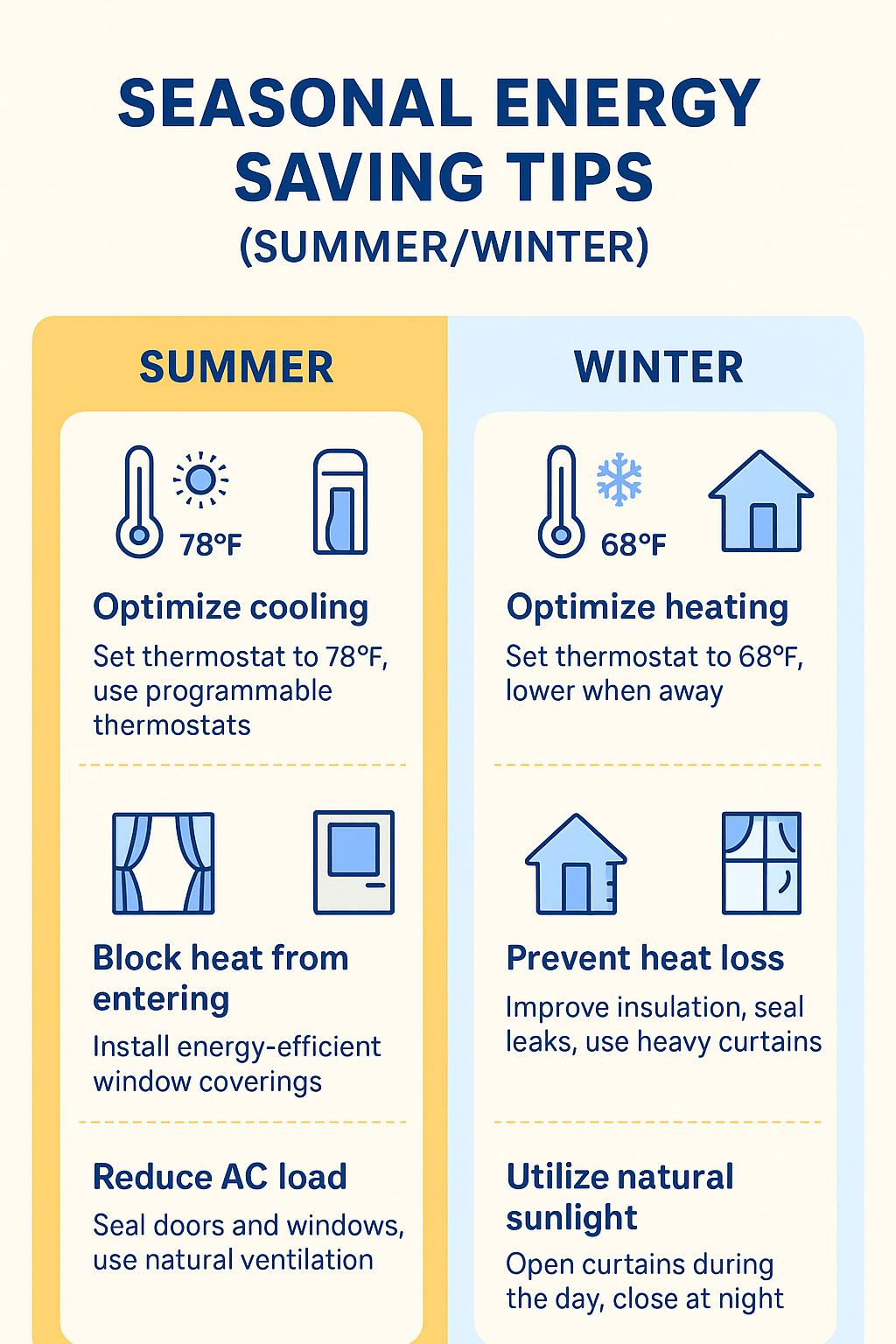
Optimize Cooling
When it comes to air conditioning, the best thermostat setting for summer is around 78°F (25°C) when you’re at home and about 85°F (29°C) when you’re away. This balance keeps you cool without overworking your AC.
Consider upgrading to a programmable thermostat or a smart model like Nest or Ecobee. These devices automatically adjust temperatures based on your schedule, ensuring your HVAC system runs only when needed.
And don’t underestimate using ceiling fans effectively—set them to rotate counterclockwise in summer to push cool air down, making the room feel cooler without lowering the thermostat.
Block Heat from Entering
Your air conditioner works harder when the summer sun turns your home into a greenhouse. Invest in energy-efficient window coverings like thick curtains or blinds to block heat during the hottest part of the day.
If you can, install double-glazed windows. They act as an insulation barrier, reducing heat transfer and keeping your indoor space cooler naturally.
Reduce AC Load
Small gaps in doors and windows can let hot air sneak in and cool air escape. Seal doors and windows with weather stripping to keep the cool air where it belongs.
Take advantage of natural ventilation—open windows early in the morning and late in the evening when temperatures are lower. This fresh air circulation can reduce your reliance on AC.
Lastly, make sure your HVAC system gets regular maintenance. A clean filter and well-serviced unit can improve cooling efficiency and cut electricity usage significantly.
Winter Energy Saving Tips
When the winter chill sets in, staying warm without blowing up your electricity bill can feel like a balancing act. With a few smart tweaks, you can keep your home cozy while saving energy and money all season long.
Optimize Heating
The best thermostat setting for winter is around 68°F (20°C) when you’re home and a few degrees lower when you’re away or sleeping. This simple adjustment can cut heating costs without sacrificing comfort.
If you haven’t already, consider investing in a smart thermostat. It automatically adjusts temperatures based on your schedule, making your heating system more efficient.
For those extra-chilly corners of your home, use space heaters for spot heating instead of cranking up the central system. This targeted approach keeps you warm where it matters most while using less energy overall.
✅ Check IESCO old bills when you’ve lost the paper version
Prevent Heat Loss
Heat loss is one of the biggest reasons for high winter energy bills. Proper home insulation—whether fiberglass, spray foam, or another material—helps trap warmth indoors.
Check for drafts and seal leaks around windows and doors using weather stripping or caulking. Even small gaps can let in cold air and push your heater to work harder.
Switch to heavy curtains or thermal drapes to retain heat at night. They act as a thermal barrier, reducing heat escape through windows.
Utilize Natural Sunlight
Nature gives you free heat every day—take advantage of it. Open curtains during the day to let sunlight naturally warm your rooms.
Once the sun sets, close curtains to lock in that warmth and prevent heat loss during the night.
All-Season Energy Saving Strategies
While summer and winter have their own challenges, some energy-saving habits work all year round—helping you cut electricity costs no matter the season. Think of these as your evergreen efficiency boosters.
Switch to LED Light Bulbs
If you’re still using old incandescent bulbs, it’s time for an upgrade. LED light bulbs use up to 80% less electricity and last much longer. They also produce less heat, making them ideal for Pakistan’s warmer months while still being bright and efficient in winter.
Reduce Standby Power Usage
Many devices keep consuming electricity even when turned off—this is called phantom load or standby power usage. Unplug chargers, electronics, and appliances when not in use, or invest in a smart power strip that cuts power automatically.
Conduct a Home Energy Audit
A home energy audit checklist helps you find exactly where your home is wasting energy. From identifying air leaks to spotting outdated appliances, this step gives you a clear plan for improvements.
Upgrade to Energy Star Appliances
When it’s time to replace an appliance, choose Energy Star–certified models. They’re designed to use less electricity without compromising performance—whether it’s your refrigerator, washing machine, or HVAC system.
Consider Solar Panels and Renewable Energy
If you’re looking for a bigger, long-term investment, solar panels can drastically cut your electricity bills. Pakistan’s sunny climate makes solar energy a smart choice, and over time, it can pay for itself while reducing your carbon footprint.
➡️ Estimate your yearly energy bill reduction with solar
Advanced Home Energy Efficiency Upgrades
If you’re ready to take your energy savings to the next level, investing in advanced upgrades can make your home more comfortable, eco-friendly, and cost-efficient year-round. While these require some upfront investment, the long-term benefits—both in reduced electricity bills and improved comfort—are worth every rupee.
Smart Home Energy Management Systems
Smart technology is changing the way we use electricity. A smart home energy management system allows you to monitor and control energy usage from your phone, tablet, or computer. You can schedule heating, cooling, and lighting, track consumption in real-time, and receive alerts when energy use spikes. This means you can make instant adjustments, saving electricity without sacrificing comfort.
HVAC Upgrades with High SEER Ratings
Your heating, ventilation, and air conditioning (HVAC) system is one of the largest energy consumers in your home. Upgrading to a unit with a high Seasonal Energy Efficiency Ratio (SEER) ensures that you get maximum heating and cooling for every unit of electricity. A higher SEER rating means better efficiency—keeping you comfortable in both summer and winter while lowering monthly costs.
Dehumidifiers in Summer & Humidifiers in Winter
Comfort isn’t just about temperature—it’s also about humidity. In summer, a dehumidifier removes excess moisture from the air, making your home feel cooler and allowing you to rely less on air conditioning. In winter, a humidifier adds moisture to dry indoor air, making it feel warmer and more comfortable without turning up the heat. Both devices work hand-in-hand to improve air quality and reduce energy use.
✅ Estimate your electricity cost difference between peak and non-peak
Cost Benefits of Seasonal Energy Efficiency
Saving energy isn’t just good for the planet—it’s great for your wallet too. By making a few smart changes to how you cool your home in summer and heat it in winter, you can see noticeable reductions in your electricity bill every year.
On average, households that follow seasonal energy saving tips—like optimizing thermostat settings, sealing air leaks, and upgrading to Energy Star appliances—can save anywhere from 10% to 30% on their annual energy costs. For many Pakistani families, that could mean several thousand rupees back in your pocket each year.
The benefits don’t stop there. When you invest in long-term solutions—such as high SEER HVAC systems, solar panels, or smart home energy management systems—you’re looking at serious ROI (return on investment). While these upgrades require an initial spend, the savings on utility bills often pay for the investment within a few years, and after that, it’s pure profit.
Think of it this way: every rupee you save on energy today is a rupee you can spend elsewhere tomorrow—whether that’s on home improvements, family needs, or simply enjoying life a little more. With energy costs on the rise, making your home more efficient isn’t just smart—it’s essential.
FAQs
1. What is the best thermostat setting for energy savings?
For most homes, the best thermostat setting is around 78°F (25°C) in summer when you’re at home and 68°F (20°C) in winter. When you’re away or sleeping, adjust the temperature a few degrees to save even more. Using a smart thermostat can automate these changes and boost your energy efficiency without constant manual adjustments.
2. How can I reduce my AC bill in summer?
To cut down your air conditioning bill, keep your thermostat at an efficient setting, use ceiling fans effectively, block heat with energy-efficient curtains, and seal any gaps in doors or windows. Regular HVAC maintenance—like cleaning filters—also helps your system run more efficiently, reducing electricity consumption.
3. What is the cheapest way to heat a home in winter?
The most affordable way to stay warm is to combine good home insulation with efficient heating habits. Keep your thermostat at 68°F (20°C), use space heaters for targeted warmth, and close heavy curtains at night to retain heat. Don’t forget to seal leaks around doors and windows to prevent heat loss.
4. Is a home energy audit worth it?
Absolutely. A home energy audit helps identify where your home is wasting electricity—whether it’s poor insulation, outdated appliances, or air leaks. With a clear energy efficiency checklist, you can make targeted improvements that can save you 10–30% on your annual electricity bill.
➡️ Retrieve the bill reference to continue online billing access
Conclusion
Whether it’s the blazing heat of summer or the chilly winds of winter, managing your seasonal energy consumption doesn’t have to be difficult—or expensive. By making small, consistent changes like adjusting your thermostat settings, sealing air leaks, upgrading to Energy Star appliances, and using natural heating and cooling methods, you can stay comfortable all year while keeping your electricity bill under control.
We’ve covered everything from summer cooling tips like using ceiling fans effectively and blocking heat with curtains, to winter heating tips such as improving home insulation and taking advantage of natural sunlight. And for year-round benefits, strategies like switching to LED light bulbs, reducing standby power usage, and considering solar panels can make a lasting difference.
Energy efficiency isn’t just about saving money—it’s about making your home smarter, more comfortable, and better for the environment. Every step you take today adds up to bigger savings tomorrow.
Start your seasonal home energy savings plan today and cut your electricity bill in half!