Common Mistakes in Net Metering Applications & How to Avoid Them
Net metering has become one of the most practical ways for homeowners and businesses in Pakistan to make the most of renewable energy. By connecting your solar power system to the grid, you can send extra electricity back to your utility company—like IESCO—and receive credits on your electricity bill. This means lower costs, a cleaner environment, and smarter energy use.
But here’s the catch: while the idea sounds simple, the net metering application process can be surprisingly tricky. Small oversights like missing signatures, incorrect inverter manufacturer details, or incomplete technical specifications can cause serious delays—or worse—lead to outright application rejection. These mistakes not only waste time and money but also delay your grid synchronization and the benefits of renewable energy adoption.
In recent years, utility companies have reported a sharp rise in net metering applications being sent back for corrections. The good news? Most of these problems are avoidable if you know what to watch out for. In this article, we’ll walk you through the most common mistakes in net metering applications and how to make sure yours sails smoothly through utility review and approval.
➡️ Print your IESCO duplicate bill quickly from here
Understanding the Net Metering Application Process
Before you can enjoy the benefits of sending extra solar power back to the grid and getting credits on your bill, you’ll need to pass through an important step—submitting a net metering application. Think of it as your official request to the utility company (like IESCO) to connect your Distributed Energy Resource (DER)—such as a rooftop solar system—to the grid under their net metering policy.
The process may look straightforward on paper, but each stage requires accuracy and attention to detail:
-
Interconnection Application – This is your first step, where you share details about your solar system, such as its nameplate capacity, inverter manufacturer, and location. Any mismatch or missing detail here can cause delays.
-
Technical Specifications Submission – Utilities require exact equipment details to ensure your system meets safety and performance standards. Errors in this step—like incorrect technical code requirements—are one of the leading causes of application rejection.
-
Permit Approvals – You’ll often need local zoning approvals or right-of-way permissions before installation. Skipping this step can hold up your grid synchronization process.
-
Final Inspection & Approval – Once your system is installed, the utility will conduct an inspection to confirm compliance. This is where you may also submit forms like the Certificate of Completion (COC) or Witness Test Request (WTR), depending on your region.
In some cases, you may also deal with Virtual Metering Aggregation (VMA)—where multiple meters are linked to share energy credits. If this applies to you, it’s essential to get it right from the start, as mid-process changes can trigger re-submission and further delays.
When you understand these steps and prepare your documents carefully, your net metering approval can move quickly, helping you start saving on your electricity bills without unnecessary setbacks.
➡️ Quickly estimate energy cost using IESCO online tool
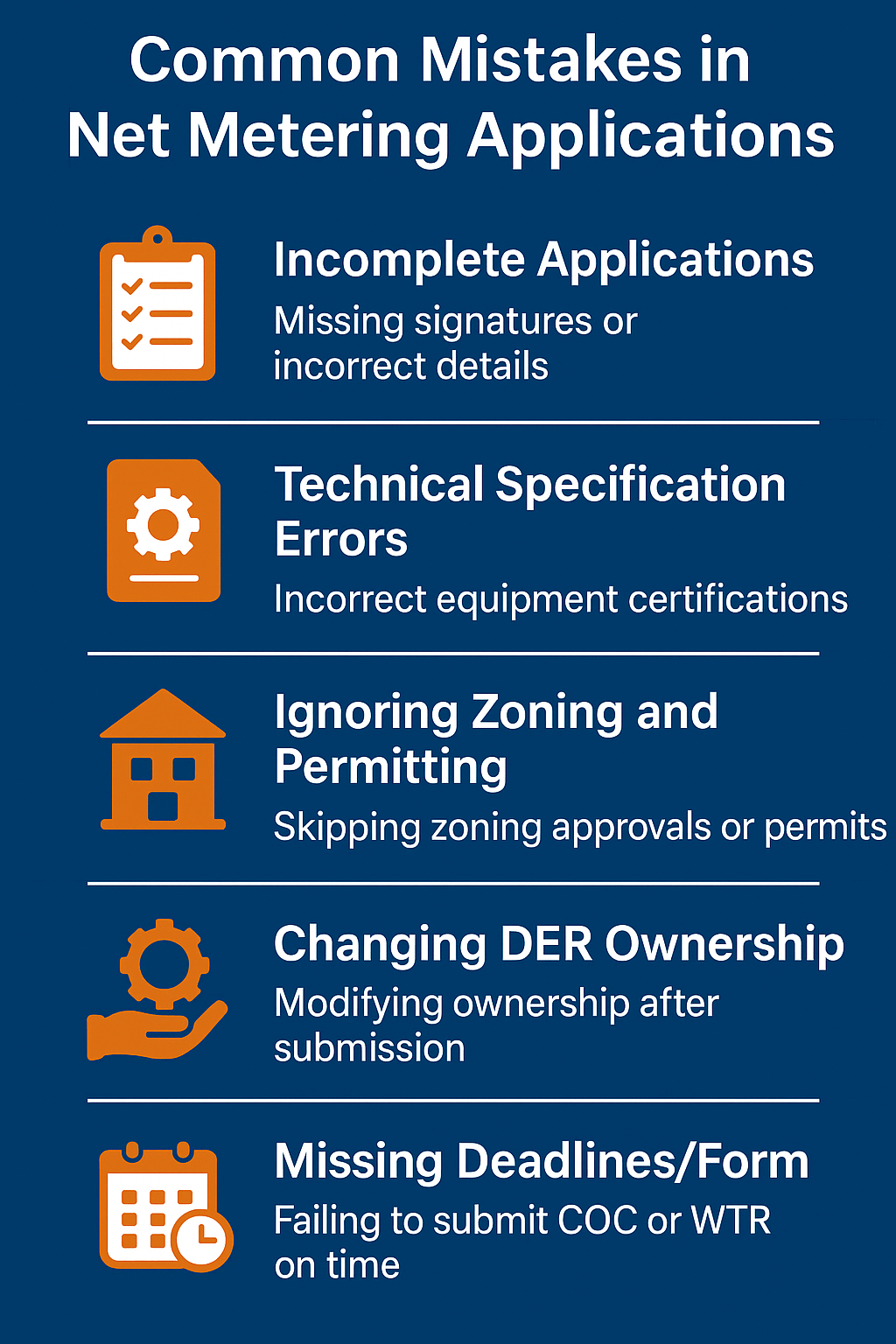
Common Mistake #1 – Submitting Incomplete or Incorrect Applications
One of the fastest ways to slow down—or completely derail—your net metering application is by submitting it with missing or incorrect information. You might think a small detail won’t matter, but in the eyes of the utility company, even one unchecked box can stop the entire application review process.
A common error is missing signatures. It sounds simple, but many applicants forget to sign in all the required places, especially if there are multiple pages or separate owner/installer sections. This immediately flags your file as incomplete, forcing you to resubmit and wait again for utility review.
Another frequent issue is entering the wrong inverter manufacturer or changing your inverter size after you’ve already submitted your application. Utilities like PPL Electric Utilities list this as one of their top rejection reasons. Even small changes in equipment specifications—such as swapping to a different inverter model—can mean you’ll need to restart your interconnection application.
Nameplate capacity errors are another trouble spot. Your system’s nameplate capacity is the official measure of its maximum power output, and it must match exactly with what’s listed on your application and technical documents. If there’s even a slight mismatch, the utility may reject the application outright to avoid grid stability issues.
The takeaway? Treat your application like an official contract. Double-check every field, verify technical details with your solar installer, and make sure all signatures are in place before submission. A little extra time upfront can save weeks—or even months—of unnecessary delays in your net metering approval.
➡️ Get historical IESCO billing data through this page
Common Mistake #2 – Technical Specification Errors
Even if your net metering application is filled out perfectly, it can still be rejected if the technical specifications don’t meet the utility’s standards. This is one of the most overlooked yet critical parts of the interconnection process—and it’s where many applicants stumble.
One major issue is submitting incorrect or outdated equipment certifications. Utilities like Liberty Utilities make it very clear: your inverter details, safety ratings, and compliance documents must be current and match the exact model you’re installing. If you provide old certificates or documents for a different model, the utility may reject your application without review.
Another frequent mistake is having mismatched technical code requirements. This happens when your solar system design doesn’t fully align with national or regional grid codes. Even small deviations—such as wiring changes or breaker sizes—can cause problems during the system inspection stage.
For example, Liberty Utilities emphasizes that an accurate match between your application, your equipment, and the actual installed system is non-negotiable. If the inspector finds that your inverter model or configuration differs from what was approved, you could be required to make costly adjustments—or in some cases, start the application process over.
The lesson here is simple: work closely with your solar installer to ensure all technical documents are accurate, up-to-date, and aligned with the utility’s technical standards. A precise and compliant submission not only speeds up your grid synchronization but also ensures long-term safety and reliability for your renewable energy system.
Common Mistake #3 – Ignoring Permitting, Zoning, and Right-of-Way Requirements
Many people get so focused on filling out the net metering application and meeting technical specifications that they forget about another crucial step—permits and approvals. This is where a lot of projects get stuck, and in some cases, it can delay your grid synchronization by weeks or even months.
Zoning requirements are one of the most overlooked factors. Your local authority may have specific rules about where and how solar panels can be installed. If you skip this step and start work without approval, you could face fines, forced removal of equipment, or a full project halt.
Similarly, right-of-way approvals can be a big hurdle—especially if your system involves running wires across shared property lines, public roads, or utility easements. Without official permission, the utility simply won’t proceed with your interconnection application.
Then there’s the permitting process itself. In some areas, you need construction permits before installation and electrical permits before final connection. Any delay in getting these documents can push back your system’s inspection and net metering approval. This creates a domino effect—your installation is complete, but you can’t export power to the grid or start earning credits.
➡️ Easily calculate your pre- and post-solar electricity cost
Common Mistake #4 – Changing DER Ownership or VMA Mid-Process
Your net metering application is reviewed based on the exact details you submit—so if those details change mid-process, it can throw the entire approval timeline off track. Two of the biggest changes that cause delays are modifying your Distributed Energy Resource (DER) ownership status and altering your Virtual Metering Aggregation (VMA) setup.
Changing DER ownership could mean transferring the system from one person or business to another, or shifting from personal to joint ownership. While it might seem like a simple paperwork update, utilities treat this as a significant change. In most cases, they will stop the application review process and require a new application completeness check, sometimes asking you to re-submit the entire interconnection application.
Similarly, altering VMA arrangements after submission—such as adding new meters, removing existing ones, or changing the allocation of energy credits—can cause your application to be sent back for revisions. Since Virtual Metering Aggregation involves complex billing and credit distribution, even small changes need full verification to ensure accuracy and grid stability.
The impact? These mid-process changes often mean weeks of delay and, in some cases, restarting from scratch. That’s extra time, extra paperwork, and extra waiting before you can connect to the grid and start enjoying the benefits of renewable energy adoption.
The smart approach is to finalize all ownership details and VMA arrangements before submitting your application. This way, you’ll avoid unnecessary interruptions and keep your net metering approval on schedule.
➡️ See how peak hour charges hurt or help your bill
Common Mistake #5 – Missing Policy Deadlines and Required Forms
In the world of net metering applications, timing is just as important as accuracy. Even if your paperwork is perfect, missing a policy deadline can cost you valuable benefits. Two of the most common forms that applicants fail to submit on time are the Certificate of Completion (COC) and the Witness Test Request (WTR).
The COC confirms that your solar system has been installed exactly as approved, while the WTR is the utility’s formal inspection request to verify safety, performance, and grid synchronization readiness. These forms are often the final step before you can officially export power and start earning credits on your bill.
If these forms aren’t submitted before the deadline, the consequences can be costly. In many utility programs, including some international examples like Illinois under the Climate and Energy Jobs Act (CEJA), missing the cutoff can shift you from full retail rate net metering—where you get maximum credit for excess power—to supply-only net metering, which offers lower credit rates. That means you’ll lose potential savings every month, just because of a missed date.
The lesson here is simple: keep track of every submission deadline from day one. Mark your calendar, set reminders, and coordinate with your solar installer to ensure the COC and WTR are filed promptly. Staying ahead of these deadlines ensures you receive the full financial and environmental benefits of renewable energy adoption without unnecessary setbacks.
Common Mistake #6 – Not Staying Updated on Utility Policies
Net metering policies are not set in stone—they evolve over time, and sometimes those changes happen faster than applicants expect. Failing to stay updated on utility policy changes is a mistake that can directly affect your net metering application and long-term savings.
One big challenge is regulatory uncertainty. Governments and utilities frequently update renewable energy regulations, interconnection requirements, and credit rates for exported electricity. If you submit an application based on outdated rules, it could be rejected, delayed, or approved under less favorable terms.
Another factor is utility policy variation. For example, PPL Electric Utilities and Liberty Utilities have different rules for inverter certifications, technical specifications, and approval timelines. Even within the same country, policies can differ by region, making it important to follow your own utility’s specific guidelines—such as those set by IESCO for customers in Pakistan.
The reason behind these strict and changing rules often comes down to grid stability. Utilities need to ensure that distributed energy resources (DERs) like solar panels integrate smoothly without causing voltage issues, overloads, or safety hazards. As technology evolves, utilities update policies to maintain this balance.
The solution? Treat policy monitoring as part of your net metering journey. Subscribe to your utility’s updates, check official notices regularly, and work with solar installers who understand current regulations. This proactive approach ensures your application remains compliant from start to finish—and keeps you in position to receive the best possible net metering benefits.
How to Avoid These Mistakes
Successfully getting your net metering application approved isn’t about luck—it’s about preparation and attention to detail. The good news? Most of the common mistakes we’ve discussed can be avoided with a few smart habits.
First, double-check your application forms before submission. A missing signature, incorrect nameplate capacity, or mismatched technical detail can be enough to send your file back for revisions, costing you weeks in delays. Think of this as your first quality check in the approval process.
Second, always work with certified solar installers who are familiar with your utility’s review and interconnection process. Professionals experienced with IESCO net metering requirements (or those of PPL Electric Utilities, Liberty Utilities, etc.) can spot errors before they happen and help ensure your system meets all technical and safety standards.
Third, stay on top of policy deadlines and announcements. This includes submitting required forms like the Certificate of Completion (COC) or Witness Test Request (WTR) on time. Even a small delay can mean losing out on full retail rate credits and being shifted to a less favorable billing arrangement.
Finally, use an application completeness checklist. Many utilities provide a standard checklist for interconnection applications—or you can create your own. This ensures you’ve covered all requirements, from equipment certifications to zoning approvals, before hitting “submit.”
By following these steps, you not only improve your chances of approval but also enjoy a smoother, stress-free journey toward solar energy savings. In the world of net metering, preparation is power—and that power can translate directly into lower electricity bills and better returns on your solar investment.
FAQs
Q1: What is the most common reason for net metering application rejection?
The biggest culprit is incomplete or incorrect applications. This includes missing signatures, wrong applicant details, mismatched inverter data, or incorrect nameplate capacity. Utilities like PPL Electric and IESCO often flag these instantly, leading to rejection or delays. Always cross-check your details before submission.
Q2: How can I avoid inverter manufacturer mismatch issues?
Stick to the inverter brand and model approved in your application. If you change the manufacturer or system size mid-process without notifying your utility, your application will likely need to be resubmitted. Always confirm with your solar installer and utility before making equipment changes.
Q3: Do permitting delays affect my grid synchronization timeline?
Yes, they can. Delays in zoning approvals, right-of-way permissions, or building permits can push your grid connection date further out. This not only affects your solar energy savings but may also cause you to miss important policy deadlines. Start the permitting process early and track its progress closely.
Q4: What happens if I miss the COC or WTR submission deadline?
Missing the Certificate of Completion (COC) or Witness Test Request (WTR) deadline can downgrade your net metering status from full retail rate to supply-only credits—a serious hit to your financial returns. Always mark these deadlines on your calendar and submit ahead of time.
Q5: Can I change DER ownership after my application is approved?
Changing Distributed Energy Resource (DER) ownership or Virtual Metering Aggregation (VMA) after approval can trigger a fresh review process. This may require updated documents, re-approvals, and even system re-inspection—adding weeks or months to your timeline. Avoid ownership changes mid-process unless absolutely necessary.
Conclusion
Avoiding the common mistakes in net metering applications isn’t just about speeding up approval—it’s about securing your investment, ensuring timely grid connection, and maximizing your solar energy savings. Small oversights like missing forms, inverter mismatches, or overlooked utility policy updates can turn an otherwise simple process into months of frustration.
The key to success lies in proactive preparation, attention to detail, and regulatory compliance. Before you even start filling out your application, take time to review IESCO’s net metering guidelines (or those of your specific utility, like PPL Electric or Liberty Utilities). This will help you understand the exact forms, deadlines, and technical requirements you’ll need to meet.
Remember, every utility has its own process, from Certificate of Completion (COC) submission to Witness Test Request (WTR) scheduling. Staying informed and organized ensures that your application moves through each stage without unnecessary hiccups.
If you approach net metering with the same care you’d give to building your solar system, you’ll enjoy a seamless approval process, faster energy credits, and the satisfaction of knowing you did it right from the start.