How to Protect Appliances from Voltage Fluctuations | Easy Home Safety Tips
Voltage fluctuations are one of the most common problems faced in many homes, especially in areas where the power supply is unstable. A sudden rise or drop in voltage may seem like a small issue, but it can cause serious harm to your expensive household appliances. Devices like refrigerators, air conditioners, televisions, washing machines, and even sensitive electronics such as computers and routers are highly vulnerable to these irregular power changes.
Think about it – one unexpected power surge, and your refrigerator’s compressor or your television’s circuit board could be permanently damaged. Not only does this lead to costly repairs, but it also shortens the lifespan of your appliances. That’s why protecting your home devices from unstable electricity supply is not just a precaution; it’s a necessity.
The good news is, there are effective ways to safeguard your appliances. From voltage stabilizers and surge protectors to UPS systems and proper grounding, these solutions can save you from unwanted stress and unexpected expenses. In the sections ahead, we’ll explore simple yet powerful methods to keep your appliances safe and ensure uninterrupted performance, even when your electricity supply is far from steady.
✅ Visit this website for IESCO bill details
Understanding Voltage Fluctuations
Before we talk about protecting your appliances, it’s important to understand what voltage fluctuations actually are. Simply put, voltage fluctuation means a sudden rise or fall in the electricity supply that enters your home. While a small variation is normal, frequent or extreme fluctuations can cause serious damage to household appliances.
Types of Voltage Issues You May Face
-
Overvoltage – When the voltage supply goes above the safe limit, it can overheat circuits and burn sensitive components in devices like televisions, refrigerators, and LED lights.
-
Undervoltage – When the power supply drops below the required level, appliances such as air conditioners and washing machines struggle to run, which puts extra stress on their motors.
-
Power Surges – These are sudden spikes in electricity, often caused by lightning strikes or faulty wiring. A single surge can fry delicate electronics like computers, routers, and smart devices.
-
Brownouts – A prolonged drop in voltage, which often causes lights to dim and appliances to operate inefficiently, leading to performance issues and long-term wear.
Common Causes of Voltage Fluctuations
Voltage instability in homes can happen due to several reasons:
-
Unstable power grid in your area.
-
High electrical load, especially during peak usage hours.
-
Poor or outdated home wiring that cannot handle modern appliances.
-
Lightning strikes and natural events that trigger sudden surges.
➡️ Find out your next IESCO bill before the due date
Signs Your Appliances Are Suffering from Voltage Fluctuations
Recognizing the warning signs can help you take action before it’s too late. Look out for:
-
Lights flickering or dimming frequently.
-
Appliances like refrigerators or air conditioners are making unusual noises.
-
Devices are heating up quickly or shutting down unexpectedly.
-
Reduced performance of electronic gadgets, such as routers dropping signals or TVs restarting on their own.
Voltage fluctuations may seem minor at first, but ignoring these signals can cost you in the long run. Knowing the root causes and spotting early warning signs is the first step toward protecting your valuable appliances.
How Voltage Fluctuations Damage Appliances
Voltage fluctuations don’t just cause momentary inconvenience – they can silently wear down your appliances, leading to costly repairs or complete breakdowns. Every household device, from a simple light bulb to an advanced smart TV, depends on a stable flow of electricity. When that supply becomes unstable, the results can be damaging.
Impact on Sensitive Electronics
Modern gadgets like computers, routers, LED TVs, and gaming consoles are extremely sensitive to even the slightest surge or drop in voltage. A sudden spike can burn delicate circuit boards, while undervoltage makes devices struggle to function, often causing them to restart, hang, or completely shut down. Over time, this reduces performance and shortens their lifespan.
Risks of Burnout, Short Circuits, and Reduced Lifespan
Unstable electricity supply is one of the leading causes of burnout and short circuits in home appliances. Power surges can blow fuses or melt wiring, while brownouts put continuous stress on motors, compressors, and electronic components. Even if your device doesn’t fail immediately, its overall lifespan is reduced, meaning you’ll have to replace it much sooner than expected.
Why Refrigerators and Air Conditioners Suffer the Most
Heavy appliances like refrigerators and air conditioners are particularly vulnerable because they rely on compressors and motors that need steady voltage to function properly. A sudden drop in voltage makes the compressor work harder, overheating the system. On the other hand, a voltage spike can burn out critical parts instantly, leaving you with a costly repair bill or the need to buy a new unit altogether.
In short, voltage fluctuations silently drain your appliances’ efficiency and reliability. Without proper protection, every power surge or drop pushes them one step closer to permanent failure.
➡️ Access your IESCO billing archive online
Protective Solutions for Appliances
Now that we know how dangerous voltage fluctuations can be, let’s look at the most effective ways to protect your home appliances. By using the right devices and preventive measures, you can safeguard your electronics, extend their lifespan, and avoid unnecessary repair costs.
Use Voltage Stabilizers
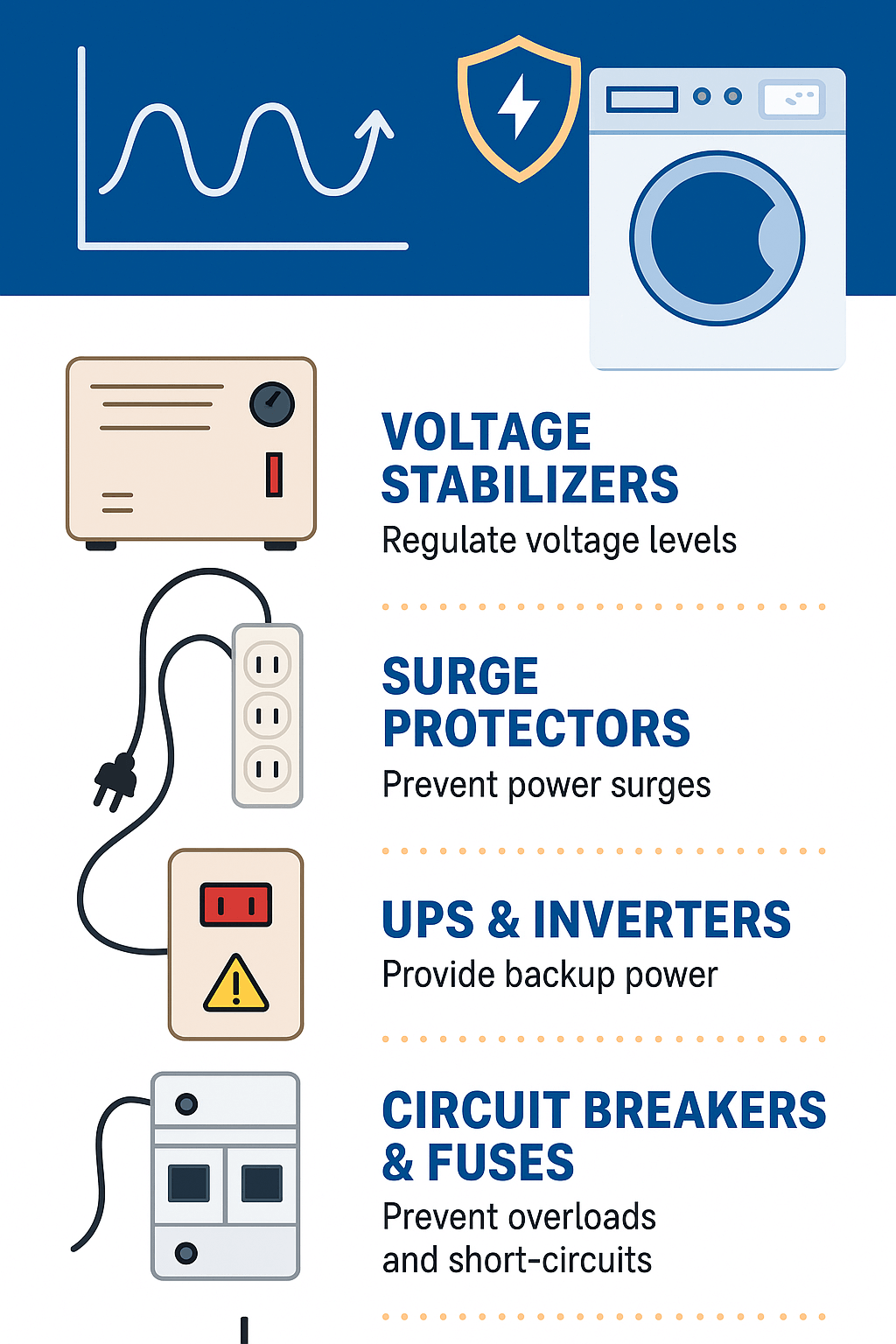
A voltage stabilizer is one of the most reliable tools to protect heavy appliances like refrigerators, air conditioners, and washing machines. It regulates the incoming voltage and ensures that your appliance receives a steady supply of electricity, even when the external power fluctuates.
-
Benefits for Refrigerators, ACs, and Washing Machines
Stabilizers prevent sudden voltage drops that strain motors and compressors. For example, refrigerators and air conditioners run smoothly without overheating, while washing machines avoid damage to their electronic control panels. -
Voltage Stabilizer vs Surge Protector – Which is Better?
A stabilizer works continuously to regulate voltage, while a surge protector shields against sudden spikes. For heavy appliances, a stabilizer is essential, whereas surge protectors are better suited for delicate electronics. In many homes, using both together provides the highest level of protection.
Install Surge Protectors
Surge protectors are designed to block or divert excess electricity during sudden power spikes caused by lightning, faulty wiring, or grid switching.
-
How They Prevent Sudden Power Spikes
A surge protector acts like a barrier, stopping excess voltage from reaching your device. Instead of frying your computer or TV, the surge protector absorbs the shock. -
Best Surge Protectors for Home Appliances
Surge protectors are ideal for sensitive electronics like LED TVs, laptops, routers, gaming consoles, and audio systems. Investing in a high-quality surge protector ensures your devices stay safe even during unexpected surges.
Uninterruptible Power Supply (UPS) & Inverters
If you live in an area with frequent power cuts or severe fluctuations, a UPS or inverter can be a lifesaver.
-
Role of UPS in Voltage Regulation and Backup Power
A UPS not only protects devices from sudden shutdowns but also provides temporary power backup. This is especially important for computers, routers, and smart devices that may lose data or become corrupted if switched off abruptly. -
Affordable Solutions for Computers and Routers
Even a basic UPS can keep your Wi-Fi router and PC running during outages, ensuring uninterrupted work or connectivity. For households, inverters offer extended backup for multiple appliances.
Circuit Breakers & Fuses
Your home’s electrical panel plays a critical role in safety, and circuit breakers and fuses are the first line of defense against overloads.
-
Protection Against Overload and Short-Circuits
A circuit breaker automatically cuts off power when it detects excessive load, preventing fire hazards and appliance damage. Fuses serve a similar purpose by breaking the circuit during dangerous current spikes. -
Importance of Regular Maintenance
Over time, circuit breakers can weaken, and fuses may become faulty. Having an electrician inspect your system regularly ensures these protective devices work effectively.
Earthing & Grounding Systems
Proper grounding is one of the most overlooked yet most important safety measures for every household.
-
Why Grounding is Essential for Electrical Safety
Earthing channels excess electricity safely into the ground instead of allowing it to pass through your appliances. This not only prevents shocks but also protects your devices during surges. -
Professional Installation Guidelines
Always have a qualified electrician install or inspect your grounding system. Poor earthing can be just as dangerous as no protection at all. Investing in a reliable grounding setup ensures long-term safety for both your appliances and your family.
By combining these protective solutions — stabilizers, surge protectors, UPS systems, circuit breakers, and proper grounding — you create a strong shield against voltage fluctuations. It’s a small investment that saves you from big losses in the future.
✅ Know your total load requirement for energy-efficient planning
Preventive Measures & Best Practices
While stabilizers, UPS systems, and surge protectors are essential for protecting your appliances, there are also simple preventive measures you can take to reduce the risk of damage. By adopting smart usage habits and upgrading your home setup, you can minimize voltage fluctuations and keep your devices running smoothly.
Load Balancing in Home Electrical Systems
One of the main causes of frequent voltage drops is overloading your wiring system. When too many heavy appliances run on the same circuit, it puts unnecessary stress on your home’s electrical supply. By balancing the load — for example, running your air conditioner on a separate line from the refrigerator — you reduce the chances of overheating, tripped breakers, and voltage instability.
Use of Energy-Efficient Appliances
Modern energy-efficient appliances are designed to consume less electricity while delivering the same performance. Not only do they help reduce monthly electricity bills, but they also put less strain on your wiring and power supply. Replacing outdated refrigerators, washing machines, or LED lights with energy-efficient models ensures smoother operation and fewer risks from unstable voltage.
Scheduling Heavy Appliance Usage
Running all heavy appliances at the same time during peak hours often leads to power fluctuations. A smart approach is to schedule their usage at different times. For example, avoid switching on the washing machine, air conditioner, and microwave together when the demand on the grid is already high. Using them during low-demand times not only protects your devices but also improves overall efficiency.
Importance of Smart Meters for Monitoring Electricity Supply
Smart meters are a powerful tool for monitoring your household’s electricity usage in real time. They help you track patterns, detect unusual fluctuations, and identify areas where power is being wasted. With this information, you can make better decisions about energy consumption, load management, and appliance usage, ensuring long-term protection for your home devices.
Common Mistakes to Avoid
Protecting your appliances from voltage fluctuations doesn’t just depend on buying the right devices — it also requires avoiding mistakes that many homeowners unknowingly make. These small errors can leave your appliances exposed and increase the risk of costly damage.
Relying Only on Cheap Extension Cords
Many people plug their appliances into low-quality extension cords thinking they’re safe. In reality, cheap extension cords are not designed to handle high loads and offer no real protection against power surges or voltage drops. Using them for refrigerators, air conditioners, or washing machines can overheat the wires, create fire hazards, and damage sensitive electronics. Always invest in certified surge protectors or heavy-duty power strips instead of relying on basic extension cords.
Ignoring Signs of Unstable Electricity Supply
Flickering lights, unusual noises from appliances, or frequent tripping of circuit breakers are clear warning signs of voltage instability. Unfortunately, many homeowners ignore these early signals until a major breakdown occurs. Addressing these issues quickly — by checking your wiring, balancing load, or installing stabilizers — can save your appliances from long-term damage.
Using One Stabilizer for Multiple Heavy Appliances
Another common mistake is connecting several large appliances, such as a refrigerator and air conditioner, to a single stabilizer. While it may seem convenient, this practice overloads the stabilizer and reduces its effectiveness. Each heavy appliance requires its dedicated voltage stabilizer to work efficiently and stay protected. Using one stabilizer for multiple high-power devices is like sharing a life jacket between two swimmers — it won’t keep either of them safe.
Avoiding these mistakes ensures that the protective measures you’ve put in place work. By staying alert and using the right equipment for the right appliance, you can give your home devices the reliable protection they truly need.
Appliance-Specific Protection Tips
Not all appliances face the same level of risk from voltage fluctuations. Some devices are more sensitive and need extra care, while others require heavy-duty protection due to their high power consumption. Let’s go through some of the most common home appliances and the best ways to keep them safe.
Refrigerator & Freezer – Always Use a Stabilizer
Your refrigerator and freezer run 24/7, which means they’re constantly exposed to power fluctuations. Even a small voltage drop can cause the compressor to overheat, while a sudden spike can burn out its motor. Using a dedicated voltage stabilizer ensures steady electricity, keeping your food fresh and your appliance safe.
Air Conditioner – Dedicated Voltage Stabilizer Required
Air conditioners are among the most power-hungry appliances in any home. They rely on compressors and motors that are highly sensitive to voltage changes. A dedicated stabilizer is a must for every AC unit because it regulates the power supply and prevents burnout during high-demand hours or sudden grid failures.
Washing Machine – Use Surge Protector + Stabilizer Combo
Modern washing machines often come with electronic control panels that are very delicate. While a stabilizer helps regulate low and high voltages, a surge protector shields against sudden spikes that can damage the control board. Using both together provides complete protection for your washing machine.
Computers & Routers – UPS with Line Conditioning
For sensitive electronics like computers, laptops, and Wi-Fi routers, a UPS (Uninterruptible Power Supply) is the best choice. It not only keeps your devices running during outages but also filters unstable voltage through line conditioning. This prevents sudden shutdowns, data loss, and hardware damage.
Television & LED Lights – Smart Surge Protectors Recommended
Your television, LED lights, and home entertainment systems are vulnerable to power surges. A smart surge protector is a cost-effective way to safeguard them. These protectors automatically cut off power when they detect a dangerous surge, ensuring your electronics remain safe and functional.
By matching the right protection method to each appliance, you reduce the risk of damage and extend its lifespan. Think of it as giving each device its safety gear — because when it comes to electricity, one size does not fit all.
Expert Recommendations & Standards
When it comes to protecting appliances from voltage fluctuations, expert advice and industry standards should never be ignored. Following proper guidelines ensures not only the safety of your appliances but also the overall reliability of your home’s electrical system.
NEPRA Regulations and Utility Company Guidelines
In Pakistan, the National Electric Power Regulatory Authority (NEPRA) sets the framework for safe and reliable electricity distribution. Utility companies issue guidelines for customers to follow, such as using certified stabilizers, maintaining proper wiring, and avoiding illegal connections. Adhering to these recommendations helps households stay protected while ensuring compliance with national safety standards.
Reference to IEEE Standards for Surge Protection
Globally, the Institute of Electrical and Electronics Engineers (IEEE) has established standards for surge protection and voltage regulation. These benchmarks outline how devices like surge protectors, stabilizers, and UPS systems should perform to effectively shield appliances. Choosing products that comply with IEEE or equivalent standards ensures your protective equipment is tested and reliable under real-world conditions.
Why Professional Electricians Recommend Regular Inspection
Even the best protective devices won’t work if your home wiring is outdated or faulty. That’s why professional electricians stress the importance of regular inspection and maintenance. Loose connections, worn-out fuses, and overloaded circuits can all lead to dangerous voltage fluctuations. Scheduling a periodic check-up ensures your wiring, grounding, and protective devices are functioning properly, giving you peace of mind.
By following NEPRA’s local regulations, IEEE’s global standards, and the advice of certified electricians, you can create a safe, efficient, and well-protected home electrical system. Prevention is always better than repair, and expert-backed measures guarantee long-term safety for your valuable appliances.
FAQs
Can voltage fluctuations damage washing machines?
Yes, washing machines are highly sensitive to voltage fluctuations. Modern models come with electronic control panels that can easily be damaged by power surges or sudden drops in voltage. Over time, unstable electricity can also weaken the motor, leading to poor performance and costly repairs. Using a stabilizer along with a surge protector is the best way to keep your washing machine safe.
Do refrigerators need a stabilizer in Pakistan?
Absolutely. In Pakistan, where the power grid is often unstable, refrigerators and freezers are at constant risk of damage. A refrigerator stabilizer ensures a steady flow of electricity and protects the compressor from both undervoltage and overvoltage conditions. Without one, even a minor power fluctuation could shorten the lifespan of your fridge.
Is UPS enough to protect my computer from power surges?
A UPS (Uninterruptible Power Supply) is excellent for preventing sudden shutdowns and protecting sensitive devices like computers and routers from undervoltage. However, on its own, it may not fully protect against strong surges caused by lightning or grid switching. Pairing a UPS with a good surge protector offers complete protection for your computer and ensures both stability and backup power.
What is the difference between surge protector and stabilizer?
A voltage stabilizer works continuously to regulate electricity, keeping the voltage within safe limits for heavy appliances like refrigerators, ACs, and washing machines. A surge protector, on the other hand, shields against sudden spikes in power that could instantly damage sensitive electronics such as LED TVs, laptops, and routers. In short, stabilizers are for long-term regulation, while surge protectors handle sudden shocks.
How do I know if my house has voltage fluctuation issues?
Some common signs of unstable electricity supply include flickering or dimming lights, appliances making unusual noises, frequent tripping of circuit breakers, and devices heating up quickly. If your refrigerator or AC struggles to start, or if your electronics reset on their own, these are strong indicators of voltage fluctuation problems. Calling an electrician for inspection and installing protective devices is the best step forward.
Conclusion
Voltage fluctuations may seem like small disturbances, but their impact on your household appliances can be devastating. From refrigerators and air conditioners to computers, routers, and LED TVs, every device in your home relies on a steady power supply to function safely. Ignoring unstable electricity not only shortens appliance lifespan but also leads to costly repairs and unnecessary stress.
The good news is that with the right precautions — voltage stabilizers, surge protectors, UPS systems, proper grounding, and regular inspections — you can shield your appliances from harm. These protective solutions are affordable compared to the heavy expenses of repairing or replacing damaged electronics.
Now is the time to take action. Invest in the right protective devices, pay attention to warning signs of unstable electricity, and follow expert recommendations for safe wiring and load management. By doing so, you not only save money but also ensure the safety, reliability, and long life of your valuable home appliances.
Your appliances work hard for you every day — it’s only fair that you give them the protection they deserve.